Balancing Subject and Environment in Travel Photography Framing
Notes From the Frame is a series exploring the strengths, tradeoffs, atmosphere, storytelling, and visual decisions that shape real-world photography.
Some photographs work because of strong narrative storytelling. Others rely more heavily on atmosphere, symbolism, scale, or emotional stillness. This image sits much closer to the second category.
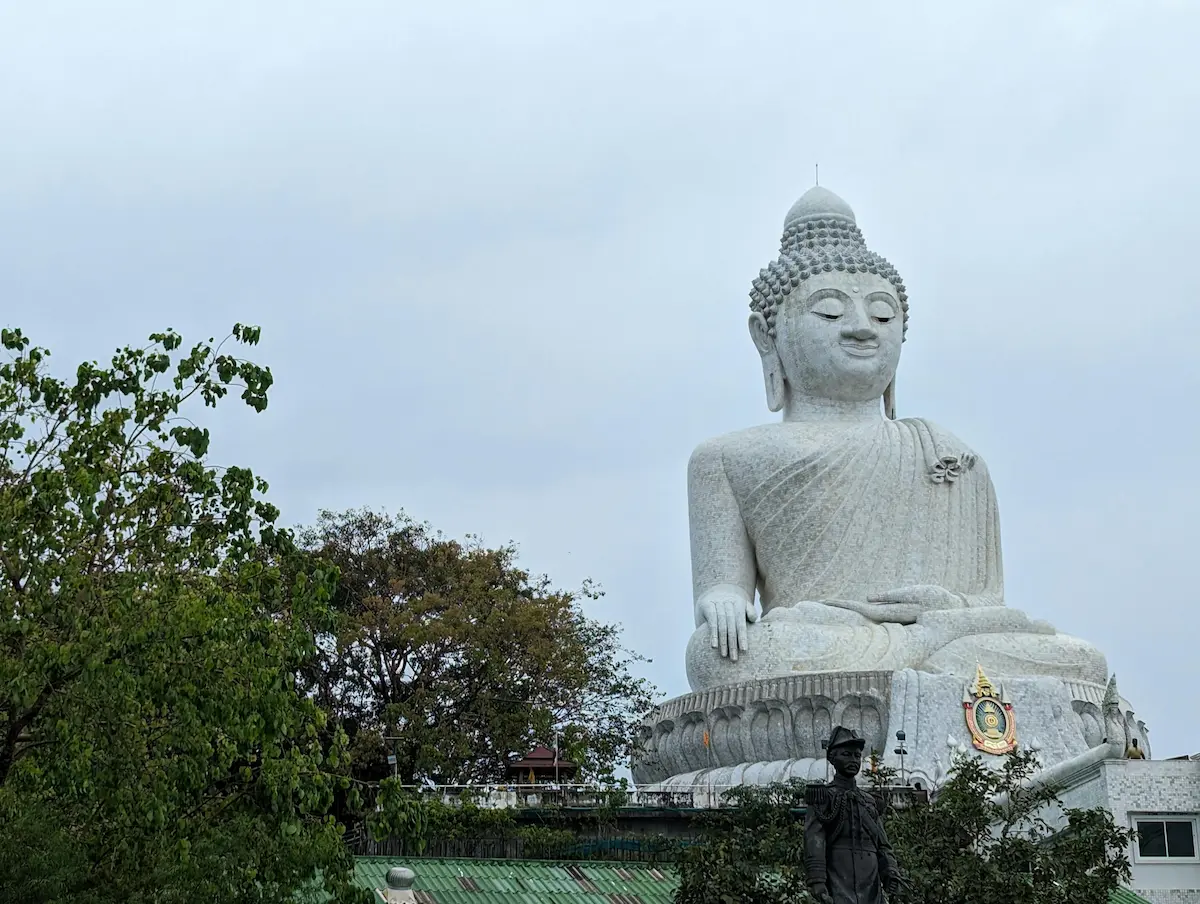
At first look, the large white Buddha statue immediately dominates the frame. Its scale, calm expression, and soft separation against the muted grey sky create a strong sense of presence almost instantly. The atmosphere feels quiet, restrained, and contemplative rather than dramatic or emotionally intense.
At the same time, the image also creates an interesting tension around environmental inclusion and framing.
The surrounding vegetation, rooftops, and lower foreground structures help ground the scene in a real environment rather than isolating the statue into a perfectly clean postcard-style image. That realism gives the photograph some observational honesty. The viewer understands this as a lived location rather than a purely symbolic monument floating against empty sky.
However, some of those same environmental elements also compete for attention.
The heavier vegetation on the left side of the frame and the fragmented transition between the roofline and statue base create a slightly unresolved feeling compositionally. The image begins raising an important question that often appears in observational and travel photography framing:
when does environmental context strengthen an image, and when does it begin weakening subject clarity?
That tension is what makes the photograph interesting to analyse.
One reason this travel photography framing still works overall is that the atmosphere remains emotionally coherent. The softer sky, restrained colour palette, and calm expression of the statue all support the same contemplative emotional direction. Even though the framing is not perfectly simplified, the image still communicates stillness and quiet presence effectively.
In this breakdown, we’ll look at how environmental context influences travel photography framing, why realism and simplification often compete with each other in observational photography, and how framing decisions can either strengthen or dilute the emotional clarity of an image.
What Works in the Frame
Scale and Presence
The strongest element in this image is the sense of scale created by the statue itself.
Even though the Buddha does not occupy the entire frame, it still dominates the scene because of its visual weight and calm physical presence. The surrounding trees, rooftops, and smaller foreground elements help reinforce that scale rather than diminish it completely. The viewer immediately understands the monument as something large, grounded, and physically imposing within the environment.
What helps the image emotionally is that the scale does not feel aggressive.
The softer sky, restrained tones, and relaxed facial expression of the statue create a quieter kind of visual authority. The photograph feels contemplative rather than overwhelming, which suits the subject matter much more naturally than highly dramatic lighting or exaggerated contrast likely would.
This is one reason the travel photography framing works despite some of the environmental clutter lower in the composition. The statue still maintains enough visual dominance to anchor the scene emotionally.
Negative Space and Sky
The open sky plays an important role in shaping the atmosphere of the image.
Large areas of negative space can sometimes create emptiness or imbalance, particularly when the subject occupies only a smaller portion of the frame. Here, however, the muted grey sky helps create emotional breathing room around the statue and reinforces the feeling of stillness.
The image benefits from restraint.
There are no strong sunset colours, dramatic cloud formations, or highly saturated tones competing for attention. Instead, the softer sky creates separation and allows the statue’s shape and expression to remain the emotional focus of the frame.
One of the more interesting aspects of this travel photography framing is that the emptier upper space contributes psychologically to the mood. The openness around the statue creates a feeling of calm presence rather than visual pressure.
The placement of the Buddha toward the right side of the composition also helps maintain balance within that open space. If the statue had been positioned centrally with the same amount of sky, the frame may have started feeling too static or symmetrical.
Emotional Atmosphere
Although the image is not strongly narrative-driven, it still communicates atmosphere very clearly.
The softer light, muted colour palette, and calm expression of the statue all support the same emotional tone. Nothing inside the frame feels rushed or visually aggressive. Even the subdued greens in the vegetation help maintain the quieter mood rather than introducing highly energetic colour contrast.
This consistency matters.
In observational photography, atmosphere often depends less on a single dramatic element and more on whether the emotional direction of the image remains coherent throughout the frame. Here, the sky, subject, scale, and colour palette are all communicating similar emotional ideas:
- stillness
- contemplation
- quietness
- restraint
That emotional alignment helps stabilise the image even when some compositional elements become slightly messy lower in the frame.
Environmental Context
One of the more valuable aspects of the image is that the statue still feels connected to a real environment.
The surrounding trees, rooftops, and lower foreground structures prevent the scene from becoming overly isolated or artificially simplified. The photograph feels more observational than postcard-like, which gives it a stronger sense of place and realism.
This is an important distinction in travel photography framing.
Perfectly clean compositions are not always automatically stronger if they remove too much environmental context. In many real-world travel situations, photographers are constantly balancing:
- atmosphere
- realism
- subject clarity
- environmental inclusion
against each other.
The image succeeds because the environment still contributes meaningfully to the feeling of the location, even if some of those elements also introduce compositional tension.
What Story Does This Image Tell?
Compared to more relationship-driven or narrative-heavy travel photographs, this image tells a quieter and far more symbolic story.
There is no visible human interaction, no movement through the frame, and no dramatic event unfolding in front of the viewer. Instead, the image communicates through atmosphere, scale, and emotional stillness.
The story here is less about action and more about presence.
The large Buddha statue immediately introduces themes of contemplation, spirituality, calmness, and permanence. The softer sky and restrained colour palette reinforce those ideas rather than competing against them. Together, the image creates a mood that feels reflective and emotionally slowed down.
At the same time, the environmental elements help prevent the scene from becoming overly symbolic or detached from reality.
The rooftops, trees, and foreground structures remind the viewer that this is not an isolated monument photographed in perfect conditions. It exists inside a living environment surrounded by everyday visual complexity. That realism changes the emotional reading of the frame slightly. The image feels more observational and grounded rather than idealised.
This is important because not every strong travel photograph needs to tell a highly direct human story.
Some images communicate more through atmosphere and symbolic presence than through narrative action. In this case, the photograph works because the emotional tone remains coherent even though the storytelling itself is relatively subtle.
The image also creates an interesting tension between serenity and imperfection.
The Buddha itself communicates calmness and stillness, while the surrounding foreground elements introduce visual interruption and slight compositional disorder. That contrast quietly reinforces the reality of photographing meaningful places in real-world conditions rather than carefully controlled environments.
At the same time, it is important not to overstate the narrative depth of the image. This is not a deeply emotional storytelling photograph in the same way a strong human interaction scene might be. The image succeeds more through atmosphere, symbolism, and contemplative presence than through direct narrative storytelling.
That distinction matters because travel photography framing is not always about isolating perfect simplicity. Sometimes the emotional strength of a photograph comes from how a subject continues holding presence even within the visual complexity surrounding it.
What Could Be Stronger?
The Left Side Carries Heavy Visual Weight
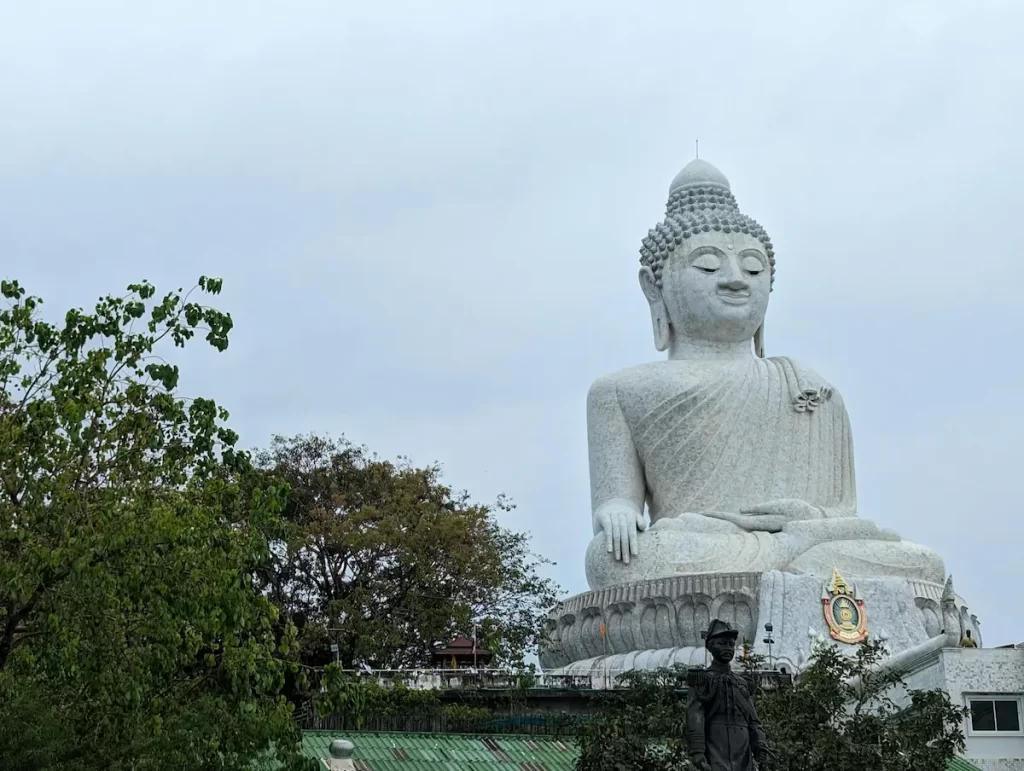
The first area that creates compositional tension is the large mass of vegetation on the left side of the frame.
The darker tones and dense texture immediately attract attention because they occupy a significant amount of space while containing relatively little visual information compared to the statue itself. As a result, the eye can become slightly trapped in that area before fully settling on the Buddha.
This is one of the more difficult balancing acts in observational travel photography framing. Trees and environmental elements can help ground a scene naturally, but when their visual weight becomes too dominant without contributing strongly to the emotional direction of the image, they can begin competing against the subject rather than supporting it.
In this case, the vegetation partially helps the atmosphere by making the scene feel real and lived-in, but it also introduces a degree of visual heaviness that slightly weakens the clarity of the composition.
The Roofline Creates Fragmentation
Another area that feels unresolved is the transition zone between the lower rooftops and the base of the statue.
The issue is not necessarily that the rooftops exist within the frame. In fact, they help reinforce environmental realism and scale. The problem is more about how the visual layers intersect with each other.
The roofline, vegetation, and statue base all merge together in a way that lacks clear separation. Because of that, the lower portion of the image begins feeling visually fragmented compared to the calmer simplicity of the upper sky and statue.
This creates an interesting contrast:
- the top of the image feels clean and emotionally controlled
- the lower section feels visually busy and structurally unresolved
That imbalance slightly weakens the overall coherence of the frame.
A Different Angle May Have Strengthened Separation
The image also feels like it was photographed from a position that was available rather than fully optimised.
That is not unusual in travel and observational photography. Real-world locations often limit movement, visibility, and framing options. However, it does create the sense that a slightly different shooting angle may have improved the relationship between the statue and the surrounding environment.
A small shift in position could potentially have:
- simplified the roofline intersections
- reduced the dominance of the left vegetation
- created cleaner subject separation
- strengthened the visual hierarchy
Importantly, this does not mean the image needed to become perfectly clean or minimal. The environmental realism is part of what gives the photograph authenticity. The challenge is more about controlling how environmental elements interact with the main subject inside the frame.
This is often where travel photography framing becomes difficult in practice. The goal is rarely complete simplification. Instead, it becomes a process of deciding which surrounding elements strengthen atmosphere and context, and which begin diluting the emotional clarity of the image.
Suggested Refinements
One of the more interesting things about this image is that the refinements are less about “making the photo dramatic” and more about improving clarity while preserving atmosphere.
A subtle crop from the left side of the frame could potentially reduce some of the visual heaviness created by the darker vegetation. The challenge would be preserving enough environmental context so the image still feels grounded and observational rather than overly cleaned or artificially simplified.
The lower transition area between the rooftops and the base of the statue may also benefit from slightly stronger tonal separation. Because the lighting is naturally soft and flat, careful editing could help create a little more distinction between those layers without forcing unnecessary contrast into the scene.
At the same time, restraint would be extremely important here.
Much of the image’s emotional strength comes from its quietness and realism. Aggressive editing, dramatic sky replacement, excessive clarity, or highly saturated colour grading would likely weaken the contemplative atmosphere that currently gives the frame its identity.
This is a good example of how editing in observational photography often works best when it supports emotional direction rather than trying to completely transform the scene.
The image also raises an important framing lesson: not every issue can or should be solved in post-processing. Some compositional tensions originate from shooting position, environmental obstacles, or real-world limitations at the moment the photograph was taken. Editing can refine those tensions slightly, but it cannot completely replace stronger in-camera framing decisions.
That distinction matters because thoughtful travel photography framing is often less about perfection and more about recognising which imperfections still contribute meaningfully to the atmosphere of the image.
The Bigger Photography Lesson
One of the most valuable things this image demonstrates is that strong travel photography framing is often not about removing every imperfect element from a scene.
Instead, it is about understanding which elements contribute meaningfully to atmosphere and which begin weakening subject clarity.
That distinction becomes extremely important in observational photography because real environments are rarely clean or visually controlled. Trees block structures, power lines intersect skylines, rooftops interrupt compositions, tourists move unpredictably through scenes, and photographers are constantly forced to make framing decisions inside imperfect conditions.
The challenge is not always:
“How do I create the cleanest image possible?”
Sometimes the more useful question becomes:
“Which environmental elements help the image feel real, and which ones distract from the emotional direction of the frame?”
This photograph sits directly inside that tension.
The vegetation and rooftops partially weaken the simplicity of the composition, but they also prevent the image from feeling detached or artificially isolated. The statue remains connected to a believable environment rather than becoming a purely symbolic object against empty sky.
That balance between realism and simplification is one of the hardest judgement calls in travel photography framing.
Many beginner photographers understandably chase perfectly clean compositions because simplicity is easier to read visually. But observational photography often becomes more interesting when environmental complexity remains present in controlled ways. The challenge is learning how much complexity the frame can carry before emotional clarity begins breaking down.
The image also reinforces another important lesson – atmosphere and narrative are not always the same thing.
This photograph contains relatively little direct storytelling in a traditional sense. There is no obvious action, conflict, or human interaction driving the scene forward. Yet the image still communicates emotional atmosphere clearly through scale, stillness, restraint, and symbolic presence.
That distinction matters because not every successful travel photograph needs to operate through dramatic narrative. Some images succeed because they create emotional tone rather than explicit story.
The photograph ultimately works because the emotional direction remains coherent even while the framing contains imperfections. The atmosphere, scale, sky, and subject all continue communicating the same feeling of quiet contemplation, which allows the image to retain presence despite its compositional tensions.
Possible Uses for This Image
This image works best in editorial and atmosphere-driven environments where emotional tone and cultural presence matter more than perfectly clean commercial simplicity.
Because the photograph contains both contemplative atmosphere and visible environmental complexity, it feels more suited to observational travel publishing than polished tourism advertising. The image communicates realism and place identity rather than highly controlled visual perfection.
As a result, this image would work strongly in:
- travel articles focused on culture or spirituality
- editorial travel publishing
- temple or cultural destination guides
- reflective travel blogs
- documentary-style travel photography portfolios
- atmosphere-driven website sections
- long-form travel storytelling
- visual essays about place and environment
The softer sky and restrained mood also make the photograph useful for layouts where emotional calmness is important. The image feels meditative rather than energetic, which gives it a quieter publishing role compared to more dramatic tourism imagery.
At the same time, the framing imperfections reduce its flexibility for certain commercial uses.
Because the vegetation and roofline create visual fragmentation lower in the frame, the image becomes less suitable for:
- luxury tourism campaigns
- minimalist branding
- clean brochure hero images
- highly polished commercial advertising
- design layouts requiring large areas of uninterrupted negative space
This is a useful reminder that not every successful photograph needs to function as a universally flexible commercial asset.
Some images work better as observational or editorial pieces because their imperfections contribute to realism and atmosphere rather than weakening the image entirely. In this case, the photograph succeeds more through contemplative presence and environmental honesty than through perfect compositional cleanliness.
That distinction is an important part of understanding travel photography framing in real-world situations.
Final Reflection
What makes this image interesting is not that the framing is perfect, but that the atmosphere survives despite the imperfections within the scene.
The photograph contains genuine compositional tensions. The vegetation carries heavy visual weight, the roofline creates fragmentation, and the lower portion of the frame feels less controlled than the calm openness above the statue. Yet the image still communicates emotional stillness effectively because the overall atmosphere remains coherent.
That balance is important.
In many forms of observational and travel photography, real-world scenes rarely arrive in perfectly simplified conditions. Photographers constantly work around environmental obstacles, limited shooting positions, and visual complexity that cannot simply be removed from the frame. Learning how to navigate those situations is often far more valuable than learning how to create technically perfect but emotionally empty images.
This photograph works because the emotional direction remains clear. The scale of the statue, the softness of the sky, and the restrained atmosphere continue pulling the image toward contemplation and quiet presence even while the framing remains slightly unresolved.
In that sense, the imperfections become part of the lesson itself.
Strong travel photography framing is not always about achieving flawless simplicity. Sometimes it is about recognising when an image still communicates atmosphere, realism, and emotional presence honestly enough for the viewer to stay with it despite the visual tensions inside the frame.
Continue Developing Your Eye for Framing and Atmosphere
Many photography discussions focus heavily on technical perfection — sharpness, presets, dramatic edits, or perfectly clean compositions. But in real-world travel photography, stronger images are often shaped by quieter decisions around framing, atmosphere, realism, and emotional direction.
Learning to recognise which environmental elements strengthen a scene, which ones distract from it, and how atmosphere changes the emotional reading of a photograph is a skill that develops gradually through observation and analysis.
If you enjoy this style of breakdown, I also offer photography mentoring focused on travel photography framing, observational photography, composition, storytelling, and editing with visual intention across travel, street, and macro photography.
The goal is not simply to create technically polished images, but to better understand how framing, atmosphere, and visual relationships shape the way photographs communicate.
You can learn more about photography mentoring here.
Frequently Asked Questions: Travel Photography Framing
What is travel photography framing?
Travel photography framing is the process of deciding how subjects, environmental elements, negative space, and visual layers interact inside the composition. Strong framing helps guide attention while still preserving atmosphere and a believable sense of place.
Do environmental elements always weaken a composition?
Not necessarily. Trees, rooftops, foreground objects, and surrounding structures can often strengthen realism and atmosphere when used intentionally. The challenge is deciding whether those elements support the emotional direction of the image or begin distracting from the subject.
Why does this image still work even though the framing is imperfect?
The emotional atmosphere remains coherent throughout the frame. The statue, softer sky, restrained colour palette, and overall stillness all communicate similar emotional ideas, which helps the image maintain presence despite some visual fragmentation lower in the composition.
Could a different shooting angle have improved the image?
Possibly. A slightly different position may have reduced the visual weight of the vegetation and created cleaner separation between the rooftops and statue base. However, observational photography often involves working within real-world limitations rather than perfectly controlled conditions.
Why is restraint important when editing images like this?
The quieter atmosphere is part of the photograph’s identity. Heavy contrast, dramatic colour grading, or excessive processing would likely weaken the realism and contemplative mood that give the image its emotional strength.
About the Author
David Hibbins is a Thailand-based photographer, writer, and publisher focused on travel, street, macro, and observational photography.
His work explores atmosphere, visual relationships, environmental storytelling, and the quieter details that often shape how places feel rather than simply how they look. Through Notes From the Frame, he analyses the strengths, tradeoffs, and visual decisions behind real-world photography with a focus on judgement, composition, and storytelling rather than camera settings alone.
Drawing from more than 15 years of experience in business mentoring and advisory roles, David’s approach to photography education is heavily influenced by observation, decision-making, communication, and long-term creative development. That analytical background now shapes much of his photography mentroing and image critique work.
Today, his work combines photography, publishing, and coaching across travel, street, and macro photography with a strong emphasis on observational awareness, visual storytelling, and editing with intention rather than formulaic processing.