Why Human Connection Changes Travel Photography Storytelling
Notes From the Frame is a series exploring the strengths, tradeoffs, atmosphere, storytelling, and visual decisions that shape real-world photography.
Some photographs rely on dramatic light or highly unusual moments to hold attention immediately. Others work more quietly, building emotional connection through atmosphere, movement, and small human details that gradually shape how the viewer reads the frame.
This image falls into the second category.
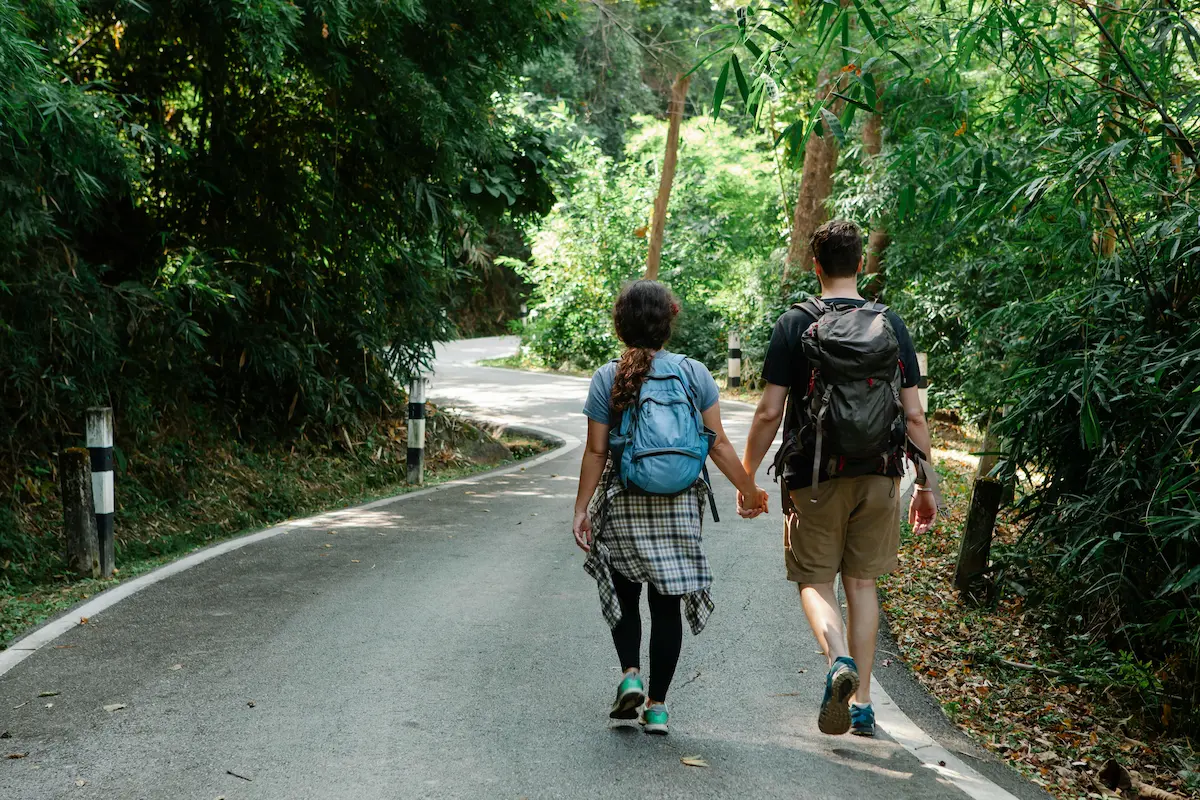
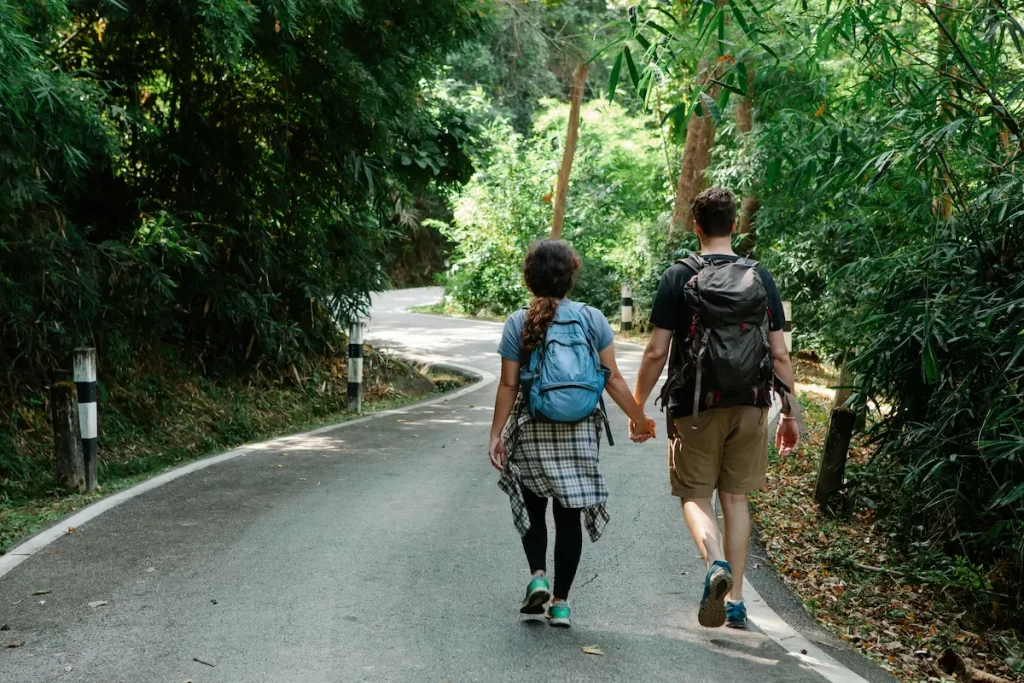
At first glance, the scene itself is relatively simple. Two travellers walk along a winding road surrounded by dense vegetation while soft natural light filters through the trees ahead. There is no dramatic action, no visible facial expression, and no obvious landmark dominating the frame. Yet the image still carries a strong sense of calm movement and emotional direction.
A large part of that comes from the human connection within the scene.
The simple gesture of the couple holding hands changes the entire emotional structure of the photograph. Without that detail, the frame could easily become a generic travel or hiking image. With it, the scene immediately begins suggesting companionship, shared experience, trust, and quiet journeying through an unfamiliar environment together.
One reason this travel photography storytelling feels effective is that the image does not force emotion too aggressively. The moment remains observational and believable rather than staged or overly cinematic. The viewer is allowed to quietly observe the scene rather than being pushed toward a highly manufactured emotional reaction.
The environment also plays an important role in shaping the atmosphere. The winding road naturally pulls the eye deeper into the frame while the surrounding vegetation creates a sense of enclosure and separation from the outside world. Together, those elements help the image communicate movement, calmness, and direction simultaneously.
In this breakdown, we’ll look at how subtle human gestures strengthen travel photography storytelling, why environmental atmosphere matters so heavily in observational photography, and how quiet narrative moments can often create stronger long-term viewing connection than more dramatic scenes.
What Works in the Frame
Direction and Movement
The first thing that gives this image strength is directional flow.
Almost every major element inside the frame encourages forward movement. The road curves naturally into the distance, the couple walks away from the camera, and even the surrounding vegetation subtly funnels the eye deeper into the scene. Nothing inside the composition strongly resists that movement, which creates a calm and cohesive viewing experience.
Curved roads are particularly effective in travel photography storytelling because they create curiosity without needing dramatic action. Unlike a straight road, which often feels static or destination-focused, a curved path suggests continuation beyond the visible frame. The viewer instinctively begins wondering where the road leads and what exists beyond the bend.
That subtle curiosity becomes part of the storytelling itself.
The pacing of the image also matters. Nothing feels rushed. The figures are walking rather than running, the environment feels quiet rather than chaotic, and the overall atmosphere encourages the viewer to slow down while reading the frame. That slower visual rhythm fits the emotional tone of the image well.
Human Connection
The emotional centre of the photograph comes from a very small detail: the couple holding hands.
Without that gesture, the image would likely communicate simple travel movement or outdoor exploration. The hand-holding immediately changes the narrative structure by introducing relationship, companionship, and emotional connection into the scene.
What makes this particularly effective is its restraint.
The image does not rely on exaggerated emotion, dramatic poses, or direct interaction with the camera. Instead, the connection feels natural and observational. The couple appears absorbed in the shared experience itself rather than performing for the photograph, which helps preserve authenticity within the frame.
This is an important aspect of strong travel photography storytelling. Often, small human gestures communicate more effectively than highly staged emotional moments because they allow the viewer to interpret the scene more naturally.
The backpacks also quietly contribute to the narrative. They suggest movement, travel, exploration, and shared journey rather than a purely local everyday moment. Combined with the road and surrounding environment, they help establish a believable sense of travellers moving through an unfamiliar landscape together.
Environmental Atmosphere
The surrounding vegetation plays a major role in shaping the emotional atmosphere of the image.
The greenery creates a sense of enclosure around the road, almost forming a natural corridor that isolates the scene from the outside world. That separation contributes heavily to the calmness of the frame because the environment feels protected and removed from urban noise or distraction.
The darker foliage on the left side of the image also helps establish mood. Although visually heavy, it introduces depth and contrast that prevent the frame from feeling overly clean or artificial. The shadows create a quieter atmosphere that suits the emotional tone of the photograph.
At the same time, the brighter area further ahead on the road subtly reinforces the idea of movement toward something beyond the frame. The viewer is naturally guided forward both emotionally and visually.
One reason this travel photography storytelling works well is that the environment does not simply function as background decoration. The road, vegetation, light, and human connection all work together to support the same emotional direction.
Rear-Facing Perspective
An interesting strength of the image is that the couple is photographed from behind rather than facing the camera.
Normally, visible facial expressions increase emotional connection in photography. In this case, however, the rear-facing perspective actually strengthens the observational quality of the frame. The viewer feels more like a quiet witness following behind the scene rather than an active participant inside it.
That distance gives the moment a sense of privacy and realism.
If the couple had been facing the camera directly, smiling, or interacting with the photographer, the image would likely shift toward staged tourism or lifestyle advertising. Instead, the photograph retains a quieter documentary feel that fits the atmosphere much more naturally.
This restraint is part of what gives the image long-term viewing comfort. The photograph allows the scene to exist without aggressively demanding emotional attention from the viewer.
What Story Does This Image Tell?
Compared to more environmentally driven scenes, this image tells a much more emotionally direct story because the narrative is immediately tied to human relationship and shared movement through the environment.
At its core, the photograph suggests companionship.
The viewer sees two people walking together along a quiet road, physically connected and moving in the same direction. That alone is enough to create implied narrative. Questions naturally begin forming almost immediately:
- Where are they going?
- How long have they been travelling together?
- Is this part of a larger journey?
- Are they escaping somewhere or moving toward something?
The image never answers those questions directly, which is part of why the storytelling remains effective. The frame gives enough information to create emotional implication without becoming overly descriptive or staged.
One of the more interesting aspects of the storytelling is how much emotional weight comes from such a small gesture. If the two figures were simply walking independently along the road, the narrative strength would reduce noticeably. The scene would still communicate travel and movement, but the emotional cohesion would weaken because the relationship between the subjects would become less clear.
The hand-holding changes that completely.
It introduces trust, companionship, intimacy, and shared experience without needing dramatic action or visible facial expression. The photograph begins feeling less like “people in a landscape” and more like “a relationship moving through an environment.”
At the same time, the image remains observational rather than cinematic. The couple is not posing for the camera, and the moment does not feel heavily directed. That realism helps the photograph avoid becoming generic travel advertising or overly polished lifestyle imagery.
The environment also contributes heavily to the narrative. The enclosed vegetation and winding road create a feeling of separation from the outside world, which reinforces themes of quiet escape, reflection, and slow movement through space. The atmosphere feels calm rather than adventurous, which gives the image a softer emotional tone than many conventional travel photographs.
This is a good example of how travel photography storytelling does not always require dramatic events or highly emotional scenes. Sometimes narrative strength comes from small relational details that quietly reshape how the viewer emotionally reads the frame.omes from small relational details that quietly reshape how the viewer emotionally reads the frame.
What Could Be Stronger?
Emotional Specificity Limits Flexibility
One of the more interesting tradeoffs within this image is that the stronger emotional storytelling also makes the photograph more specific in how it can be used.
Because the couple is holding hands, the image immediately begins suggesting intimacy, companionship, romantic travel, or shared escape. That emotional clarity strengthens the storytelling, but it also narrows the range of possible interpretations compared to more observationally neutral travel images.
If the subjects had simply been two independent hikers walking along the same road, the photograph would likely feel more open-ended and commercially flexible. The viewer could project a wider range of meanings onto the scene rather than being guided toward a more relationship-focused reading.
This is not necessarily a weakness, but it is an important distinction in travel photography storytelling. Stronger emotional direction often creates stronger narrative connection while simultaneously reducing broader publishing flexibility.
As a result, the image feels much more naturally suited to:
- couples travel
- wellness retreats
- slow travel
- eco tourism
- relationship-focused tourism campaigns
than to more general-purpose travel advertising or broad destination marketing.
The Scene Risks Familiarity
Although the emotional connection works well, the broader visual structure of the image is still built around a fairly familiar travel photography setup:
- road
- travellers
- backpacks
- greenery
- movement into distance
Because those visual ingredients are commonly used in travel imagery, the uniqueness of the frame relies heavily on atmosphere and emotional restraint rather than on an especially rare or visually surprising moment.
That is important to acknowledge honestly.
The image succeeds because the emotional tone feels believable and observational, not because the scene itself is highly unusual. In many ways, the quiet realism of the frame is part of its strength, but it also means the photograph depends heavily on subtle execution rather than spectacle.
Heavy Shadow Weight on the Left Side
The darker vegetation along the left side of the frame contributes positively to mood and enclosure, but it also creates significant visual weight within that area of the image.
For some viewers, this helps reinforce the quieter atmosphere and draws attention toward the brighter road ahead. For others, the density of the shadows may slightly compete with the cleaner directional flow created by the road itself.
This is one of those situations where technical “correction” is not automatically the right answer. Brightening the shadows too aggressively could easily damage the calm natural atmosphere that gives the image much of its emotional character.
Instead, the heavier left side becomes more of a tonal tradeoff than a clear compositional flaw.
The Bigger Photography Lesson
One of the most useful things this image demonstrates is how small human gestures can completely reshape the emotional direction of a photograph.
From a purely structural perspective, the frame itself is relatively simple:
- a road
- vegetation
- two travellers
- soft natural light
- forward movement
None of those elements are especially unusual on their own. In fact, versions of this scene appear constantly throughout travel photography.
What changes the image is the relationship between the subjects.
The simple act of holding hands transforms the frame from:
“people walking through an environment”
into:
“a shared journey happening inside an environment.”
That distinction matters enormously in travel photography storytelling because viewers naturally respond to emotional relationships faster than they respond to scenery alone.
At the same time, this image also highlights an important balance between storytelling and restraint.
The photograph does not rely on exaggerated emotion or heavily staged interaction. The couple is not performing for the camera, and the scene still feels observational rather than manufactured. That subtlety helps preserve realism and allows the atmosphere to remain believable.
This is often where quieter travel images become more effective over time.
Many beginner photographers understandably search for dramatic moments because dramatic moments create immediate impact. But quieter photographs frequently depend on implication rather than spectacle. A small gesture, directional movement, environmental atmosphere, or subtle relationship between subjects can sometimes create stronger long-term viewing engagement than a highly obvious emotional scene.
The image also reinforces another useful lesson: Storytelling and commercial flexibility are not always the same thing.
The stronger the emotional specificity becomes, the narrower the possible audience often becomes as well. In this case, the relationship-focused reading strengthens emotional connection but also guides the image more heavily toward couples travel, wellness, retreat, or slow-travel style publishing.
That does not reduce the image’s value. It simply changes the role the photograph is best suited to perform.
Understanding that distinction is an important part of developing stronger observational photography skills. Not every successful image needs to become a universally flexible asset. Some photographs succeed because they communicate a very particular emotional atmosphere clearly and honestly.
This image works because it understands restraint. The storytelling remains quiet, believable, and grounded in small human details rather than trying to force emotion beyond what the scene naturally offers.
Possible Uses for This Image
This image works best in environments where emotional atmosphere and human connection are more important than broad destination coverage or high-energy travel marketing.
Because the storytelling is relationship-driven, the frame naturally aligns with slower and more reflective forms of travel publishing. The quiet pacing, enclosed greenery, and subtle human interaction all contribute to a feeling of calm movement rather than excitement or spectacle.
As a result, this image would work strongly in:
- couples travel articles
- wellness retreat marketing
- eco lodge websites
- slow travel features
- hiking or nature retreat campaigns
- reflective travel blogs
- tourism campaigns focused on relaxation or reconnection
- editorial storytelling around shared travel experiences
The image would also function well as a supporting photograph inside longer-form travel content where emotional pacing and atmosphere matter more than iconic destination visibility.
One of the strengths of this travel photography storytelling is that the scene feels believable rather than heavily manufactured. That realism gives the frame a softer editorial quality which can often feel more trustworthy than highly polished tourism advertising imagery.
At the same time, the emotional specificity of the image makes it less flexible for broader commercial usage.
Because the relationship dynamic is so strongly implied, the photograph becomes less suitable for:
- general destination branding
- solo travel campaigns
- broad tourism advertising
- high-energy adventure marketing
- neutral editorial coverage
This is a useful reminder that stronger emotional storytelling often narrows audience interpretation while simultaneously deepening emotional connection for the right audience.
From a portfolio perspective, the image fits comfortably within observational travel photography because it demonstrates atmosphere, human relationship, directional composition, and restrained storytelling without relying on overly dramatic visual techniques.
Final Reflection
What gives this image its strength is not dramatic action or visual spectacle, but emotional clarity delivered through restraint.
The photograph understands that small human details can sometimes carry far more narrative weight than highly staged moments. A simple gesture, combined with directional movement and quiet environmental atmosphere, is enough to transform an otherwise familiar travel scene into something that feels personal and emotionally grounded.
At the same time, the image never pushes too aggressively for attention. The couple remains part of the environment rather than dominating it, and the scene retains an observational quality that helps the storytelling feel believable rather than manufactured.
That balance is important.
In many forms of observational and travel photography, stronger images often emerge not from forcing emotion into a frame, but from recognising when subtle relationships already exist naturally within the scene.
This photograph works because it allows atmosphere, movement, and human connection to support each other quietly. The result is an image that may not feel loud or dramatic at first glance, but one that gradually becomes more emotionally readable the longer the viewer spends with it.
Continue Developing Your Visual Storytelling
Many aspects of photography can be learned technically — exposure, editing, sharpness, and camera control. But understanding why an image communicates emotionally is often a much slower skill to develop.
Storytelling, atmosphere, visual relationships, and observational awareness all shape how viewers respond to a photograph long before they begin thinking about technical perfection.
If you enjoy this style of analysis, I also offer photography coaching focused on visual judgement, travel photography storytelling, composition, and real-world image evaluation across travel, street, and macro photography.
The goal is not simply to create technically correct images, but to better understand how photographs communicate mood, narrative, and human connection through small visual decisions.
You can learn more about photography mentoring here.
Frequently Asked Questions
What makes travel photography storytelling effective?
Strong travel photography storytelling usually comes from emotional implication, atmosphere, and human connection rather than dramatic action alone. Small gestures, environmental context, movement, and believable moments often create stronger long-term engagement than heavily staged scenes.
Does every travel image need a strong emotional story?
No. Some travel photographs succeed through atmosphere, composition, texture, or environmental observation rather than direct narrative storytelling. The important thing is understanding what the image communicates honestly rather than forcing emotional meaning into every frame.
Why does the hand-holding change the image so much?
The physical connection immediately clarifies the relationship between the subjects. Without it, the image would feel more open-ended and observational. The gesture introduces companionship, trust, and shared journey, which significantly strengthens the travel photography storytelling within the frame.
Why does the image still feel observational instead of staged?
The couple is not interacting with the camera or exaggerating emotion for the photograph. The rear-facing perspective and natural movement help the scene feel believable and quietly observed rather than heavily directed or cinematic.
Where would this type of image work best?
This type of image works particularly well in couples travel content, wellness retreats, eco tourism, slow travel publishing, and editorial storytelling where atmosphere and emotional connection are more important than broad destination marketing or high-energy tourism campaigns.
About the Author
David Hibbins is a Thailand-based photographer, writer, and publisher focused on travel, street, macro, and observational photography.
His work explores atmosphere, visual relationships, environmental storytelling, and the quieter details that often shape how places feel rather than simply how they look. Through Notes From the Frame, he analyses the strengths, tradeoffs, and visual decisions behind real-world photography with a focus on judgement, composition, and storytelling rather than camera settings alone.
Drawing from more than 15 years of experience in business mentoring and advisory roles, David’s approach to photography education is heavily influenced by observation, decision-making, communication, and long-term creative development. That analytical background now shapes much of his photography coaching and image critique work.
Today, his work combines photography, publishing, and mentoring across travel, street, and macro photography with a strong emphasis on observational awareness and visual storytelling.