Balancing Atmosphere and Subject in Environmental Portrait Photography
Notes From the Frame is a series exploring the strengths, tradeoffs, atmosphere, storytelling, and visual decisions that shape real-world photography.
Portrait photography often becomes heavily focused on the subject alone. The environment is reduced, softened, blurred away, or treated as secondary background detail while all visual attention is directed toward the person being photographed.
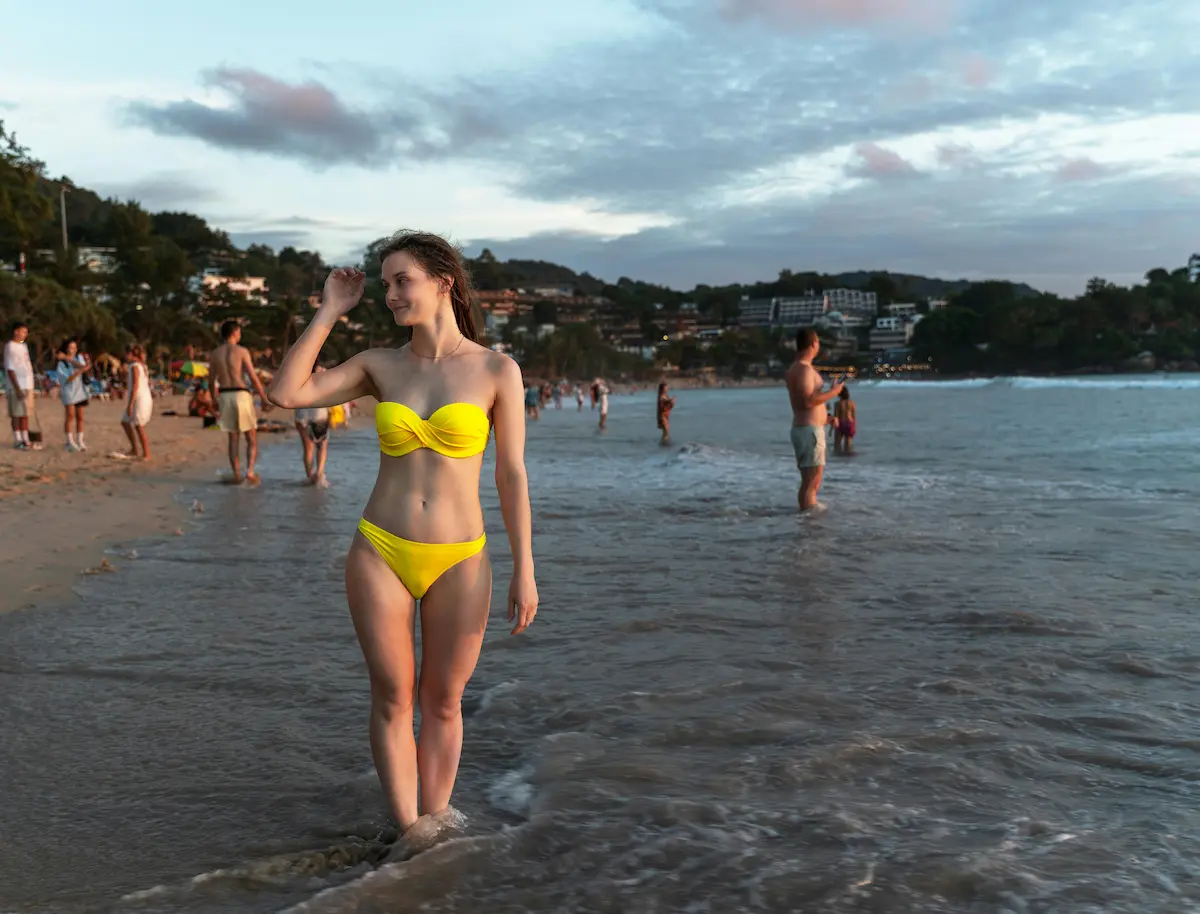
What makes this image more interesting is that the environment still matters.
Although the woman immediately becomes the visual anchor of the frame through colour contrast, subject placement, and separation from the background, the beach itself continues contributing strongly to the emotional experience of the image. The shoreline, surrounding beachgoers, soft evening light, and distant Phuket hillside all remain active parts of the photograph rather than disappearing behind the subject.
That balance is important in environmental portrait photography because it changes how the viewer emotionally reads the image.
If the environment disappears completely, portraiture can sometimes begin feeling detached from reality or overly performative. In this frame, however, the subject still feels connected to a believable place and moment. The photograph communicates not only attractiveness, but also atmosphere, tourism energy, tropical calmness, and a sense of being physically present within the environment itself.
The image also sits in an interesting space between observational realism and constructed portraiture.
There is clearly some awareness of the camera and some level of posing involved, but the body language still feels relatively relaxed and natural rather than heavily stylised or exaggerated. The scene retains enough realism that the photograph feels emotionally accessible rather than overly manufactured.
That distinction matters because viewers often respond differently to images that feel recognisable and believable compared to images that feel entirely constructed around visual perfection.
At the same time, this photograph also raises useful questions about environmental portrait photography itself:
- how much should the environment contribute?
- when does posing begin feeling artificial?
- how much realism should remain inside attractive imagery?
- and why do some technically clean portraits still feel emotionally distant?
In this breakdown, we’ll look at how atmosphere and environment influence environmental portrait photography, why realism can sometimes strengthen portraiture emotionally, and how surrounding context changes the way viewers connect with images of people.
What Works in the Frame
The Subject Immediately Establishes Visual Hierarchy
The image succeeds quickly because the subject is easy to identify without the composition becoming overly isolated or simplified.
The bright yellow bikini creates immediate colour contrast against the softer blues, greys, and muted earth tones throughout the rest of the frame. That contrast naturally pulls the eye toward the subject first while still allowing the surrounding environment to remain visually active.
Importantly, the separation does not feel overly engineered.
The background still contains people, shoreline activity, buildings, and environmental detail, but the visual hierarchy remains controlled enough that the frame does not become confusing. The viewer understands where to look first while still absorbing the atmosphere around the subject.
That balance is one of the more difficult aspects of environmental portrait photography. If the subject becomes too dominant, the environment loses meaning. If the environment becomes too active, the portrait itself begins weakening.
Here, the image manages to sit somewhere between those two extremes.
The Environment Still Carries Emotional Weight
One of the strongest aspects of the photograph is that the beach itself still contributes emotionally to the frame.
The shoreline activity, distant people in the water, hillside buildings, evening light, and softer wave movement all help create a believable sense of place. The image feels connected to a real Phuket beach environment rather than functioning purely as a beauty-focused portrait session.
This matters because environmental portrait photography often becomes stronger when the viewer can emotionally imagine existing inside the environment itself.
The photograph communicates:
- tropical warmth
- tourism atmosphere
- relaxed movement
- evening calmness
- shared public space
rather than simply attractive subject against beach backdrop.
The environment remains active enough that the image still feels observational to a degree.
That observational quality helps prevent the photograph from becoming emotionally sterile or overly commercial.
The Posing Feels Relatively Natural
Although the subject is clearly aware of the camera, the pose itself remains restrained enough that the image still feels believable.
The body language feels closer to:
- relaxed awareness
- casual movement
- momentary interaction
than heavily choreographed glamour posing.
That distinction changes the emotional accessibility of the image considerably.
Many highly stylised portrait images create emotional distance because the viewer becomes too aware of performance, perfection, or image construction. In this photograph, however, the expression and body positioning still feel connected to the surrounding environment rather than disconnected from it.
The subject appears to exist inside the scene rather than replacing the scene.
That is an important characteristic of stronger environmental portrait photography because the viewer continues reading:
- atmosphere
- place
- mood
- environmental context
alongside physical attractiveness.
Atmosphere and Light Support the Image
The softer evening light also contributes strongly to the emotional tone of the frame.
The scene feels warm without becoming overly saturated or artificially cinematic. The cloud cover and fading daylight create a quieter atmosphere that helps soften the overall emotional reading of the image.
If the scene had been photographed under harsher midday sunlight or aggressively processed tropical colours, the image may have started feeling more commercial and less emotionally grounded.
Instead, the lighting supports:
- calmness
- realism
- relaxation
- environmental softness
which helps maintain the balance between portraiture and atmosphere.
This is another reason the environmental portrait photography works here. The emotional tone of the light remains consistent with the relaxed body language and open beach environment, allowing the image to feel cohesive rather than visually forced.
What Story Does This Image Tell?
Unlike stronger documentary or street photographs that rely heavily on narrative tension or human interaction, this image tells a softer and more aspirational kind of story.
The photograph communicates:
- leisure
- warmth
- relaxation
- travel freedom
- tropical atmosphere
more than a deeply specific moment or event.
That distinction is important because not every successful image needs to operate through complex storytelling. Some photographs succeed because they allow viewers to project themselves emotionally into the environment rather than observe a clearly defined narrative unfolding in front of them.
This image works largely through that kind of projection.
Different viewers may read very different things into the frame depending on:
- personal travel memories
- emotional associations with beaches
- ideas of relaxation
- attraction to tropical environments
- aspirations around travel or lifestyle
For some viewers, the image may feel nostalgic. For others, it may feel aspirational or calming. Someone who has travelled through Phuket or similar beach destinations may connect emotionally to the atmosphere itself rather than the subject specifically.
That is one of the more interesting aspects of environmental portrait photography – the environment often carries part of the emotional storytelling load.
The shoreline activity, distant beachgoers, soft waves, and fading daylight all contribute to the emotional reading of the frame. Without those environmental layers, the image would become far more focused on attractiveness and posing alone.
Instead, the viewer still feels connected to place , atmosphere , movement and surrounding life. This helps the portrait feel more believable and emotionally accessible.
At the same time, the storytelling remains relatively light.
The image does not contain strong documentary tension, emotional conflict, or layered human complexity in the way a powerful street photograph might. The viewer is not left asking major narrative questions about what is happening or why.
Instead, the photograph succeeds more through mood and environmental suggestion than through explicit story structure.
That softer storytelling approach is perfectly valid within environmental portrait photography. Sometimes the role of the image is not to communicate deep narrative complexity, but rather to create a believable emotional atmosphere that viewers can comfortably step into psychologically.
In this case, the photograph works because the subject, environment, and atmosphere all support the same emotional direction rather than competing against each other.
What Could Be Stronger?
The Subject Sits Slightly Too Centrally
One of the first compositional things that stands out is the subject placement.
Although the image remains visually balanced overall, the subject sits close enough to the centre of the frame that the composition loses a small amount of directional energy. The viewer understands the subject immediately, but the image does not create especially strong movement through the environment itself.
A slightly different framing approach may have strengthened the relationship between the subject and the surrounding beach atmosphere by allowing more environmental flow in one direction or the other.
This is a subtle issue rather than a major flaw, but in environmental portrait photography, small positioning changes can significantly alter how immersive or dynamic the environment feels around the subject.
The Environmental Layers Could Be Slightly Stronger
The environment contributes positively to the image, but some of the background layering remains relatively soft in terms of visual storytelling.
The distant beachgoers, hillside, and shoreline atmosphere help establish place effectively, but they do not create especially strong secondary narrative points inside the frame. The environment supports the portrait emotionally rather than becoming deeply interactive with it.
That is perfectly acceptable for this style of image, but it does mean the photograph remains closer to:
attractive portrait inside believable environment
rather than:
deeply layered observational environmental portraiture.
In other words, the atmosphere is strong, but the environmental complexity itself remains relatively gentle.
The Pose Still Carries Some Constructed Awareness
Although the body language feels more natural than highly stylised influencer-style posing, there is still enough awareness of the camera that the image remains partially constructed.
Again, this is not necessarily a weakness.
Most environmental portrait photography exists somewhere between:
- fully observational
and: - intentionally directed.
However, the image does not completely disappear into realism either. The viewer still understands that the subject is participating in the creation of the photograph rather than simply existing unaware inside the environment.
That slightly reduces the feeling of spontaneity compared to stronger documentary-style human imagery.
The Image Relies More on Atmosphere Than Emotional Depth
One of the more honest observations about the frame is that much of its success comes from:
- atmosphere
- attractiveness
- environmental calmness
- visual accessibility
rather than deep emotional complexity.
The image is easy to read and emotionally approachable, which helps it commercially and aesthetically. At the same time, it probably does not stay with the viewer in the same psychologically layered way that stronger observational or documentary photographs sometimes do.
That distinction is important because environmental portrait photography often succeeds through mood and recognisable human presence rather than through intense narrative depth.
This photograph works well within that lane, but it is useful to acknowledge the difference between:
- emotionally pleasant imagery
and: - emotionally profound imagery.
They are not always the same thing.
Suggested Refinements
One of the strengths of this image is that it already feels relatively natural and restrained, so the refinements should focus more on supporting atmosphere than dramatically reshaping the photograph.
A very subtle crop adjustment could potentially improve the environmental balance slightly by shifting the subject away from the near-central positioning. The goal would not be to isolate the subject more aggressively, but rather to create a little additional directional movement through the frame while still preserving the surrounding beach atmosphere.
The image may also benefit from restrained tonal shaping that gently reinforces the softer evening mood already present within the scene. Because the emotional strength of the photograph comes largely from calmness and environmental realism, maintaining believable skin tones and natural ocean colour would be extremely important.
This is where environmental portrait photography can easily become over-processed.
Heavy tropical saturation, excessive skin smoothing, dramatic teal-and-orange grading, or hyper-contrasty sunset tones would likely weaken the realism that currently helps the image feel emotionally accessible. The softer atmosphere is part of the photograph’s identity, and over-editing would risk shifting the image toward generic social media travel aesthetics rather than believable environmental portraiture.
The background activity should also remain visible.
The distant beachgoers, shoreline movement, and environmental texture all contribute meaningfully to the sense of place. Removing too much environmental detail through aggressive blur, masking, or excessive subject separation would likely reduce the observational quality that gives the image much of its warmth.
This is a good example of how editing in environmental portrait photography often works best when it supports emotional believability rather than trying to maximise visual perfection. The image already succeeds because the subject still feels connected to a living environment, and the refinements should preserve that relationship rather than overpower it.
Comparing Constructed and Observational Portraiture
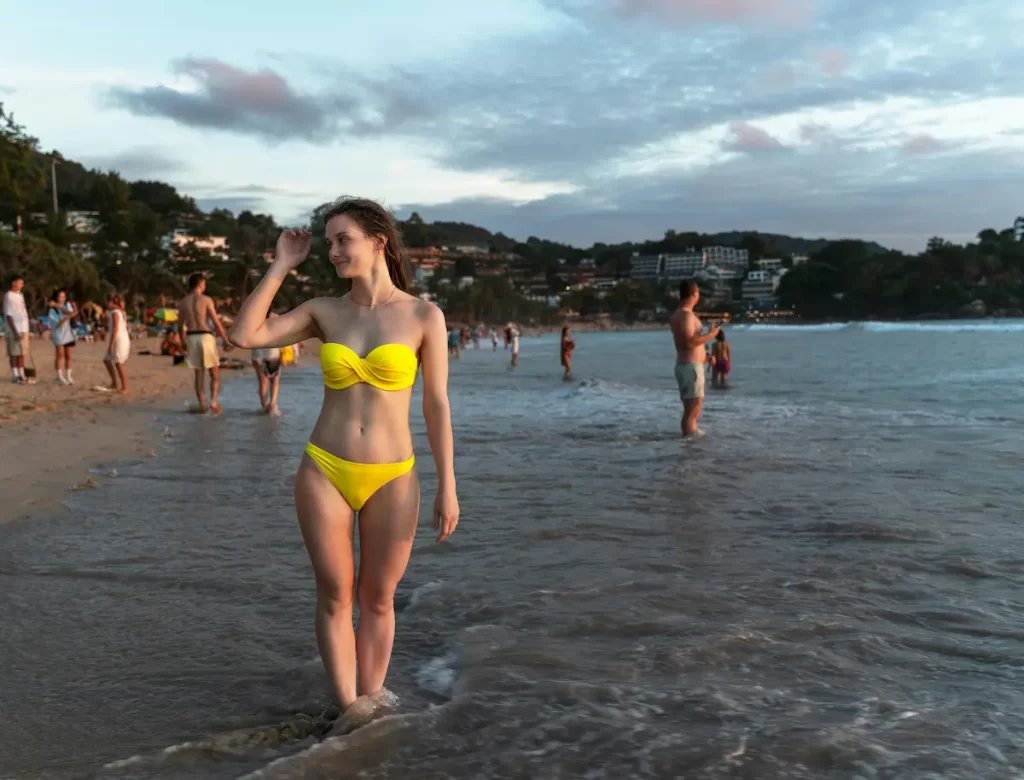
One of the more interesting things about this image is that it sits somewhere between observational realism and constructed portrait photography rather than fully committing to either direction.
The subject is clearly aware of the camera, and there is intentional posing involved. At the same time, the image still retains enough environmental atmosphere and natural body language that it avoids feeling overly performative or heavily manufactured.
That balance matters.
In many forms of modern portrait photography — particularly social media-driven imagery — the environment often becomes secondary to performance. The image is designed primarily around attractiveness, perfection, posing, or visual polish, while the surrounding world is reduced to decorative background.
This photograph works differently because the environment still contributes emotionally to the frame.
The shoreline activity, distant beachgoers, fading light, and open beach atmosphere continue shaping how the viewer experiences the image. The subject remains important, but she still feels connected to a believable moment inside a real environment rather than existing separately from it.
That distinction changes the emotional accessibility of the photograph considerably.
When portraiture becomes too constructed, viewers sometimes admire the image visually without emotionally relating to it. The photograph may appear technically impressive or aesthetically polished while still feeling psychologically distant. In contrast, images that retain some level of realism often allow viewers to project themselves into the environment more naturally.
This is one reason environmental portrait photography can feel emotionally stronger than heavily isolated portrait work even when the image itself is technically less “perfect.”
The environment creates context.
The atmosphere creates recognisability.
The realism creates emotional entry points.
At the same time, this does not mean observational realism automatically makes every image stronger.
Without basic compositional awareness, emotional coherence, subject separation, and intentional framing, realism alone can quickly become visual randomness. Strong environmental portrait photography still depends on:
- visual hierarchy
- atmosphere
- tonal consistency
- believable posing
- environmental balance
- emotional direction
The difference is that those tools are being used to support recognisable human presence rather than to manufacture flawless perfection.
This photograph succeeds because it allows some imperfection and environmental looseness to remain inside the frame. The image still feels shaped and intentional, but not so controlled that the atmosphere disappears completely.
That balance between construction and realism is often where environmental portrait photography becomes most emotionally effective.
Possible Uses for This Image
This image works particularly well in environments where atmosphere, travel aspiration, and believable human presence are more important than highly stylised fashion or glamour photography.
Because the environment still contributes meaningfully to the frame, the photograph feels naturally suited to:
- travel publishing
- Phuket tourism content
- resort or beach lifestyle marketing
- editorial travel features
- wellness or leisure campaigns
- social travel branding
- creator-style travel storytelling
- atmosphere-driven website imagery
The image communicates relaxation and place effectively without becoming overly commercial or aggressively performative.
One of the strengths of this environmental portrait photography is that viewers can still imagine themselves inside the environment rather than simply observing an isolated subject. The shoreline activity, softer light, and open beach atmosphere all help maintain that emotional accessibility.
The photograph would also function well as part of a broader visual sequence.
Inside a travel article, destination guide, or visual essay, the image could help communicate:
- tropical calmness
- tourism atmosphere
- social openness
- beach culture
- emotional pacing between stronger documentary-style frames
That flexibility makes the image useful editorially even though it is not a deeply narrative-driven photograph.
At the same time, the image is probably less suited to:
- high-fashion portraiture
- minimalist fine art portrait work
- heavily stylised luxury campaigns
- dramatic cinematic storytelling
- emotionally intense documentary photography
The frame succeeds more through atmosphere and recognisable human presence than through visual extremity or profound emotional complexity.
That is an important distinction because environmental portrait photography often becomes strongest when it feels believable enough that viewers emotionally recognise the scene rather than simply admire technical perfection from a distance.
Final Reflection
What makes this image work is not simply that the subject is attractive, but that the photograph still allows atmosphere and environment to remain emotionally important.
The beach, surrounding people, softer light, and open shoreline all continue shaping the experience of the image rather than disappearing behind the portrait itself. That environmental presence helps the photograph feel more believable and emotionally accessible than many heavily isolated or over-constructed portrait images.
At the same time, the image does not fully abandon intentional portraiture either.
There is still posing, subject awareness, and compositional control present within the frame. The photograph exists somewhere between observational realism and constructed portrait photography, which is part of what makes it interesting to analyse. It retains enough realism to feel human while still using visual hierarchy and atmosphere intentionally.
That balance matters.
In many forms of environmental portrait photography, the strongest images are not necessarily the most technically perfect or dramatically stylised. Sometimes the photographs that connect most effectively are the ones that still feel emotionally recognisable — images where viewers can imagine the environment, atmosphere, and moment existing beyond the photograph itself.
This image works because the subject still feels connected to a living environment rather than separated from it. The realism survives alongside the portraiture, and that combination gives the frame much of its emotional warmth.
Continue Developing Your Understanding of Atmosphere and Human Presence
Many portrait photography tutorials focus heavily on posing, perfection, retouching, or creating highly controlled visual results. But some of the most emotionally effective images come from understanding how atmosphere, environment, and believable human presence shape the way viewers connect with a photograph.
Learning to recognise when a portrait still feels emotionally real — and when it begins feeling overly constructed — is an important part of developing stronger visual judgement over time.
If you enjoy this style of analysis, I also offer photography coaching focused on environmental portrait photography, observational photography, atmosphere, storytelling, composition, and editing with intention across travel, street, and macro photography.
The goal is not simply to create visually polished images, but to better understand how photographs communicate mood, realism, and emotional connection through the relationship between people and their environments.
You can learn more about photography mentoring here.
Frequently Asked Questions
What is environmental portrait photography?
Environmental portrait photography is a style of portraiture where the surrounding environment remains an important part of the image rather than functioning as simple background decoration. The environment helps communicate atmosphere, place, mood, or context alongside the subject.
Why does this image feel more natural than heavily posed portraits?
Although the subject is aware of the camera, the body language and surrounding atmosphere still feel relatively believable and relaxed. The environment remains active and lived-in, which helps the photograph feel emotionally accessible rather than overly constructed.
Does realism matter in portrait photography?
Realism can strongly influence emotional connection. Many viewers respond more deeply to photographs that feel recognisable, human, and believable rather than perfectly polished or heavily stylised. That does not mean technical skill stops mattering, but realism often helps viewers emotionally enter the image more naturally.
Why is the environment important in this photograph?
The shoreline activity, distant beachgoers, evening light, and open beach atmosphere all contribute emotionally to the frame. Without those elements, the image would become much more focused on posing and attractiveness alone rather than atmosphere and place.
Can technically imperfect images still be successful?
Yes. Strong photographs are not always defined purely by technical perfection. Atmosphere, emotional recognisability, storytelling, environmental context, and viewer interpretation can all contribute heavily to how meaningful or memorable an image becomes.
About the Author
David Hibbins is a travel and observational photographer whose work focuses on atmosphere, environmental storytelling, and real-world visual experiences across Thailand and Asia.
Through Reflections Photography, the Notes From the Frame series, and his broader publishing work with Travel With Insight, he explores how observation, judgement, and visual decision-making often influence stronger photographs more than technical perfection alone.
His photography philosophy centres around:
• Observation over assumption
• Meaning over spectacle
• Atmosphere over distraction
• Visual judgement over gear obsession
• Storytelling over simple description Rather than focusing primarily on camera settings or equipment, his work examines how photographers can develop a deeper understanding of composition, atmosphere, narrative, and the visual relationships that shape more meaningful images.