Why Imperfect Reflections Often Feel More Atmospheric in Photography
Notes From the Frame is a series exploring the strengths, tradeoffs, atmosphere, storytelling, and visual decisions that shape real-world photography.
Most people imagine reflection photography as something clean and perfectly symmetrical.
Still water. Sharp lines. Mirror-like surfaces where the reflection feels almost mathematically precise.
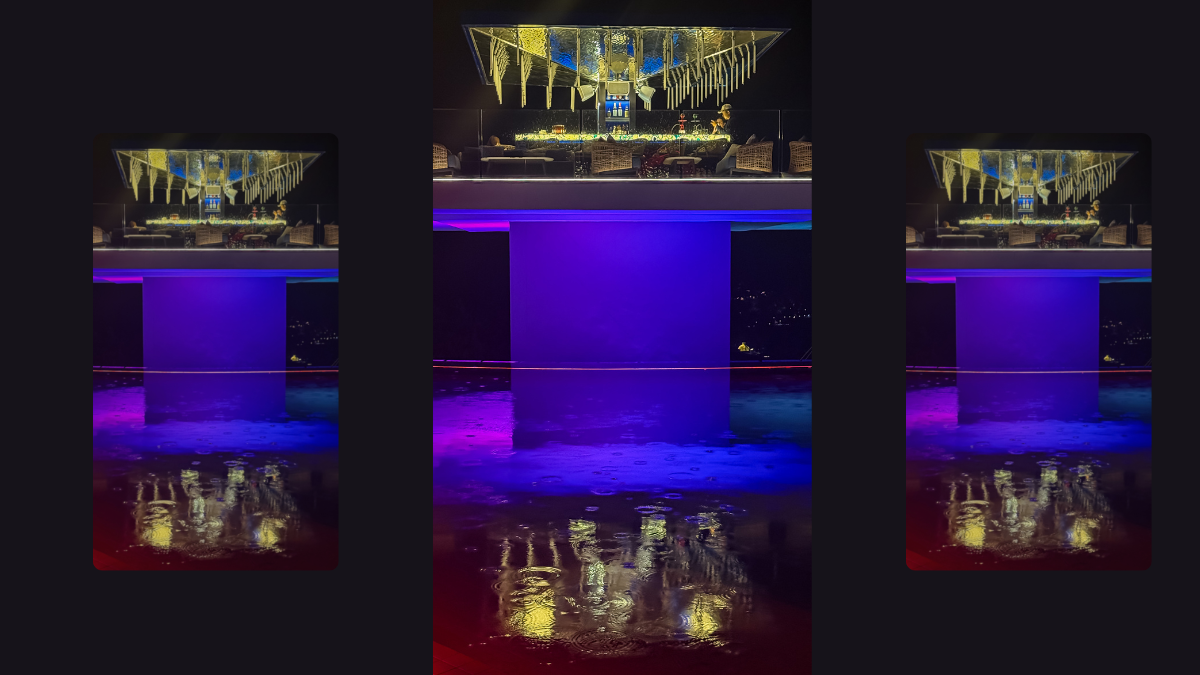
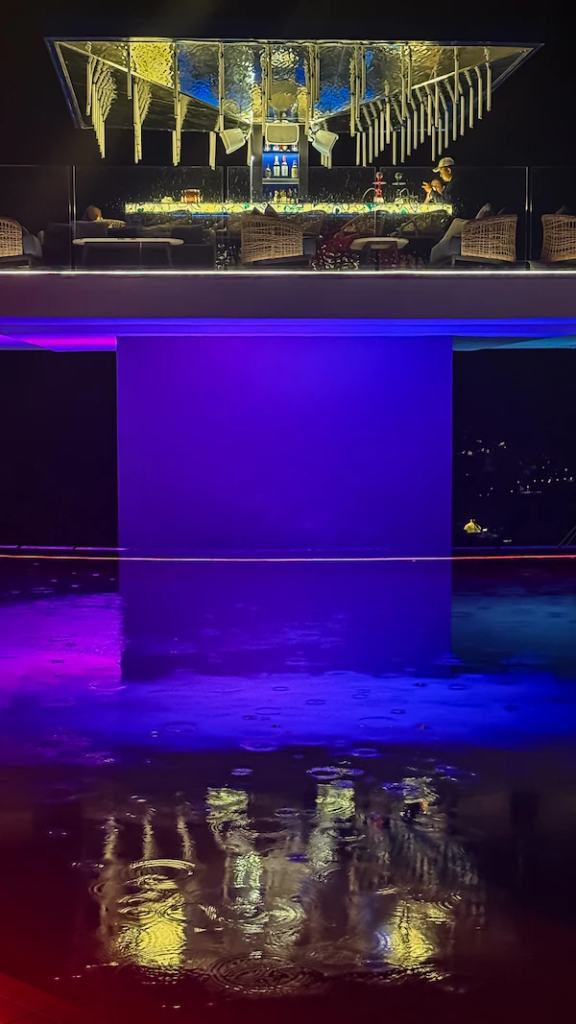
But standing above the pool at Kipo Steakhouse in Kata during light rain, the image became more interesting the moment the reflection started breaking apart.
Every raindrop changed the surface slightly. The lights stretched and distorted across the water while the reflection constantly shifted between clarity and interruption. Instead of feeling controlled, the scene started feeling atmospheric. Imperfect. Temporary.
What initially drew my attention was the symmetry of the rooftop structure itself, but the longer I watched the rain interact with the water, the more the image stopped being about architectural balance and started becoming about instability. The reflection never fully settled. The surface kept moving. The atmosphere kept changing.
That is often the part of reflection photography that interests me most.
Not perfect mirror reflections for the sake of technical precision, but the moments where reflections become emotionally unpredictable. Rain, movement, texture, darkness, and imperfect surfaces can sometimes create far stronger atmosphere in photography than flawless symmetry ever could.
In many ways, reflection photography is less about finding perfect surfaces and more about learning to notice how light, weather, and environment interact with one another in constantly changing ways.
Why Perfect Reflections Can Sometimes Feel Emotionally Flat
A lot of reflection photography naturally gravitates toward perfection.
Perfectly still water. Clean symmetry. Sharp architectural lines mirrored across calm surfaces. There is nothing inherently wrong with that approach, and technically those images can often look impressive very quickly.
But sometimes perfect reflections can also feel emotionally distant.
Once everything becomes too precise, the image can start feeling more like graphic design than atmosphere. The viewer notices the symmetry first, but not necessarily the feeling of being there. The reflection becomes predictable. Controlled. Almost static.
What interested me about this scene in Kata was that the rain prevented the reflection from ever fully settling into perfection. The surface kept shifting every few seconds. Light stretched across the water differently depending on where the raindrops landed. The reflection constantly moved between recognisable structure and distortion.
That instability created tension within the frame.
Instead of simply documenting a rooftop reflection, the image started carrying some of the atmosphere of the evening itself — humidity, movement, darkness, weather, and interruption all becoming part of the photograph.
In many ways, atmospheric reflection photography often relies less on technical perfection and more on emotional realism. Imperfect reflections can sometimes feel more believable because they resemble the way environments are actually experienced in real life. Rain, movement, texture, and uneven surfaces introduce unpredictability into the frame, and that unpredictability can create stronger emotional connection than flawless symmetry alone.
That does not mean reflection photography needs to avoid clean reflections entirely. Sometimes simplicity and precision work beautifully. But atmosphere often begins appearing once the environment starts interacting with the reflection itself rather than simply mirroring it perfectly.
Rain Changes Reflection Photography Completely
Rain changes reflection photography in ways that are difficult to fully control.
The moment water stops behaving like a perfectly still surface, reflections become unstable. Shapes stretch unpredictably. Light breaks apart. Small ripples interrupt symmetry before it has time to settle. Instead of creating exact mirror images, the environment starts creating fragments.
That was exactly what drew me into this scene while photographing at Kipo Steakhouse.
The rooftop structure itself was visually strong, but the image only really started becoming interesting once the rain began disturbing the reflection below it. The surface of the water kept shifting every few seconds. Some areas briefly became clear while others dissolved into distortion as raindrops moved across the pool.
What I found myself responding to was not perfection, but interruption.
The reflection never fully stabilised long enough to feel static. The atmosphere remained active the entire time. Light stretched unevenly across the surface while the rain introduced texture into parts of the frame that otherwise may have felt too clean or predictable.
That unpredictability is often what gives rain reflection photography its emotional character.
In perfectly calm conditions, reflections can sometimes become visually obvious very quickly. The viewer understands the symmetry immediately. But once weather begins interacting with the surface, the image often becomes more layered. The eye spends more time moving through the frame because the reflection itself contains variation, instability, and imperfection.
In many ways, rain adds atmosphere to reflection photography because it prevents the scene from feeling frozen. The environment continues affecting the image even while the photograph is being made. The result feels less like a technical exercise in symmetry and more like a moment that existed briefly before changing again a few seconds later.
Sometimes atmosphere begins appearing the moment a reflection stops behaving perfectly.
Reflection Photography Is Often More About Observation Than Technique
One thing I have slowly started realising about reflection photography is that it changes the way you move through environments.
You begin noticing reflective surfaces almost automatically. Rainwater collecting on the ground. Light bouncing off windows. Distorted reflections in wet streets. Small fragments of atmosphere appearing briefly across glass, metal, or water before disappearing again.
The camera settings themselves are usually the least interesting part of the process.
What matters more is learning to recognise when reflections are actually contributing something emotionally to a scene rather than simply existing as a visual trick. Not every reflection improves a photograph. Sometimes reflections add clutter or distraction. Other times they quietly introduce atmosphere, depth, or emotional texture without immediately drawing attention to themselves.
That difference usually comes down to observation rather than technique.
While photographing this scene in Kata, I found myself paying less attention to creating a perfectly balanced reflection and more attention to how the weather was interacting with the environment overall. The rain, darkness, rooftop lighting, empty space, and distorted surface all started working together as part of the atmosphere rather than as separate visual elements.
In many ways, reflection photography becomes more interesting once it stops being purely about symmetry.
The strongest moments often happen when reflections begin supporting the emotional feeling of a place rather than simply mirroring it. Sometimes that may be calm water reflecting soft light at sunrise. Other times it may be rain interrupting the surface completely while the image becomes more unstable and atmospheric as a result.
That is part of what makes observational photography so rewarding over time. You begin recognising visual relationships that most people naturally walk past. Reflections become less about searching for perfection and more about paying attention to how light, weather, texture, and environment briefly interact with one another in ways that may only exist for a few seconds before disappearing again.
Imperfect Surfaces Often Create Stronger Atmosphere
There is something emotionally different about reflections once the surface stops behaving perfectly.
Clean reflections often feel visually impressive because they simplify the image immediately. The eye recognises the symmetry quickly. Everything appears controlled and stable. But imperfect surfaces introduce uncertainty into the frame, and that uncertainty can create atmosphere in ways that technically flawless reflections sometimes cannot.
Rain was doing exactly that while photographing this scene.
Every ripple interrupted the reflection differently. Some parts of the rooftop structure remained recognisable while other areas dissolved into fragmented light and colour. The image constantly shifted between clarity and distortion depending on how the surface of the water moved from moment to moment.
That instability made the atmosphere feel more believable.
Real environments rarely feel perfectly controlled. Light changes constantly. Weather interrupts scenes unexpectedly. Surfaces move. Reflections break apart. In many ways, imperfect reflections often feel emotionally stronger because they resemble how places are actually experienced rather than how they appear in highly controlled photography.
This is something I find increasingly interesting within atmospheric reflection photography.
The goal stops becoming perfect visual symmetry and starts becoming emotional cohesion instead. The reflection, weather, darkness, empty space, and environmental texture all begin contributing to the same emotional feeling within the frame. Sometimes the imperfections themselves become the reason the image works at all.
A perfectly still surface at Kipo Steakhouse that night may have produced a cleaner reflection, but I do not think it would have created the same atmosphere. The rain transformed the image from a simple rooftop reflection into something quieter, less predictable, and far more connected to the feeling of standing there during that moment.
In many ways, beauty in reflection photography often appears once the environment starts interrupting the reflection itself. The distortion becomes part of the emotional language of the image rather than something that needs to be removed or controlled.
Why Reflection Photography Changes The Way You See Locations
One unexpected thing about spending more time with reflection photography is that it slowly changes the way environments are observed even when the camera is not in your hands.
You begin noticing surfaces differently.
Rain on pavement stops feeling like bad weather and starts becoming potential atmosphere. Pools of water reflect fragmented pieces of surrounding light. Windows briefly mirror movement from the street outside. Wet roads distort neon signs into stretched colour and texture. Even ordinary locations begin carrying layered visual relationships that are easy to miss when moving through places too quickly.
That shift in awareness is probably what interests me most about reflection photography overall.
The process becomes less about hunting for visually dramatic reflections and more about paying attention to subtle environmental interactions that already exist naturally around you. Light, weather, texture, darkness, architecture, and movement all start overlapping in ways that create atmosphere without needing to be heavily engineered.
This scene at Kipo Steakhouse reminded me of that while standing above the pool during light rain.
Initially the rooftop structure itself was what caught my attention, but after watching the rain distort the reflection repeatedly, the image stopped feeling purely architectural. The atmosphere became more important than the symmetry. The reflection started carrying some of the instability of the evening itself rather than simply duplicating the scene above it perfectly.
That is often where observational photography becomes rewarding over time.
You stop searching only for obvious subjects and start becoming more aware of temporary relationships within environments instead. Reflection photography trains attention toward moments that may only exist briefly before weather, movement, or changing light alter the scene completely.
In many ways, reflections are less about mirrors and more about awareness. They encourage slower observation of environments that most people naturally move through without ever fully noticing.
Closing Reflection
What stayed with me most about this image was not the symmetry of the rooftop itself, but the moment the reflection stopped behaving perfectly.
The rain kept interrupting the surface just enough to prevent the image from settling into something too clean or predictable. Every ripple slightly changed the atmosphere. The reflection remained recognisable, but never fully stable.
That instability ended up becoming the entire emotional character of the photograph.
In many ways, reflection photography becomes far more interesting once perfection stops being the goal. Weather, texture, darkness, movement, and imperfect surfaces often introduce emotional realism that perfectly controlled reflections sometimes struggle to create on their own.
The longer I spend paying attention to reflections while photographing different environments, the more I realise the process is not really about mirrors at all. It is about awareness. Learning to notice how light interacts with surfaces, how atmosphere changes spaces, and how temporary moments of distortion can sometimes reveal more feeling than technical perfection ever could.
Sometimes the strongest photographs appear once the environment starts interrupting the image instead of cooperating with it completely.
Photography becomes much more rewarding once you stop focusing only on camera settings and start paying closer attention to atmosphere, light, observation, and what actually deserves attention within a frame.
If you want to explore that side of photography further, you can learn more through the Reflections Photography courses and learning resources here.
FAQ Reflection Photography
What is reflection photography?
Reflection photography involves using reflective surfaces such as water, glass, metal, or wet pavement to create visual depth, atmosphere, symmetry, or layered composition within an image. Reflection photography can range from highly symmetrical scenes to more abstract and atmospheric interpretations shaped by weather, movement, and environmental texture.
Why do imperfect reflections sometimes look better in photography?
Imperfect reflections often feel more emotionally believable because they introduce instability and atmosphere into the image. Rain, ripples, uneven surfaces, and distortion can create movement and emotional texture that perfectly clean reflections sometimes lack.
Does rain improve reflection photography?
Rain can dramatically change reflection photography by adding texture, movement, and unpredictability to reflective surfaces. Raindrops interrupt symmetry and constantly alter the reflection, which can create stronger atmosphere and emotional realism within the frame.
Why do reflections create atmosphere in photography?
Reflections add atmosphere because they layer visual information within a scene. Light, colour, texture, and distortion all interact differently across reflective surfaces, often creating mood, depth, and environmental complexity that make images feel more immersive.
Is reflection photography more about observation or technique?
While technical settings still matter, reflection photography is often heavily dependent on observation. Recognising how light, weather, surfaces, and environmental conditions interact usually plays a larger role than camera settings alone.
Can reflection photography work without perfect symmetry?
Absolutely.
Some of the most atmospheric reflection photography relies on distortion rather than perfect mirroring. Broken reflections, rain ripples, uneven surfaces, and partial reflections can often create more emotional depth than technically flawless symmetry.
What surfaces work best for reflection photography?
Water is one of the most common reflective surfaces used in reflection photography, but reflections can also appear in windows, wet roads, polished metal, puddles, mirrors, glass buildings, and even small fragments of moisture or texture within an environment.
Why do distorted reflections feel more emotional?
Distorted reflections often feel more emotional because they introduce unpredictability into the image. The viewer spends more time exploring the frame rather than immediately understanding the symmetry. That instability can create stronger atmosphere and emotional realism.
What makes reflection photography feel cinematic?
Atmosphere often plays a major role in cinematic reflection photography. Darkness, rain, colour contrast, environmental lighting, texture, and restrained composition can all contribute to a more immersive emotional feeling within the image.
How does reflection photography change the way you see environments?
Over time, reflection photography encourages greater awareness of light, surfaces, weather, and environmental relationships. Many photographers begin noticing reflective details naturally while moving through locations, which can fundamentally change how ordinary spaces are visually experienced.
About the Author
David Hibbins is the founder of Reflections Photography and the writer behind the Notes From the Frame series — a collection of observational essays exploring atmosphere, visual awareness, environmental storytelling, and the quieter details that often shape meaningful photography.
Rather than focusing heavily on technical perfection or camera gear, his work explores how light, weather, environment, timing, and human observation influence the emotional feeling of an image.