
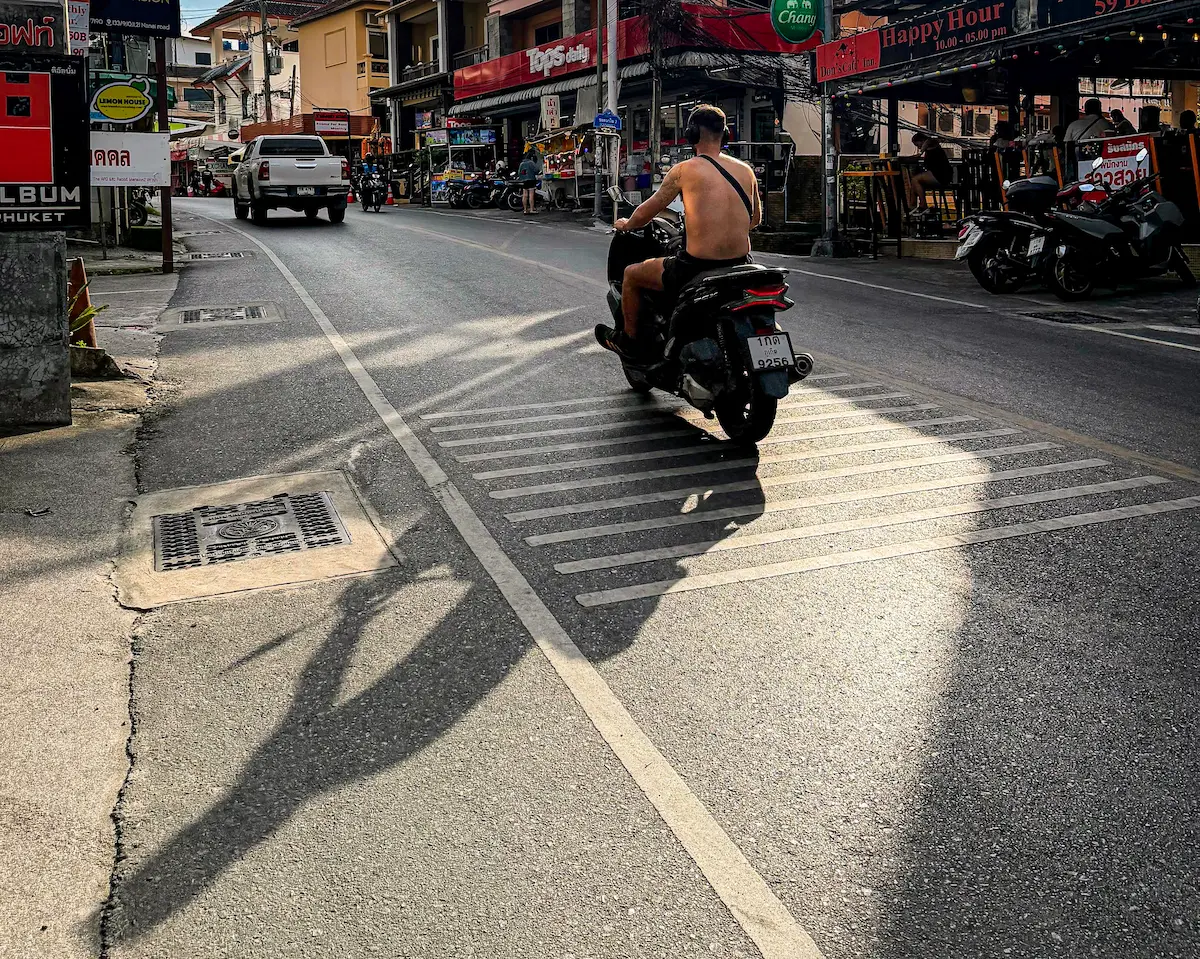
Why Some Travel Photos Feel Real — And Others Feel Forgettable
Most people have seen travel photos that are technically impressive but strangely forgettable. The colours are dramatic, the location is beautiful, and the editing is polished, yet the image disappears from memory almost immediately. At the same time, some photographs stay with us for years despite being simpler, quieter, or even slightly imperfect.
That difference is often what separates strong travel photography storytelling from photography that only captures appearances.
In many cases, memorable travel images are not built around perfect lighting, expensive cameras, or dramatic locations. They are built around observation. A photograph feels more real when it captures atmosphere, timing, emotion, or the natural rhythm of a place rather than simply trying to impress the viewer for a few seconds.
This is also why some destinations become visually interchangeable online. As more photographers chase the same angles, editing styles, and social media trends, many images start to lose the feeling of genuine experience behind them.
Good travel photography storytelling usually works differently. It gives viewers a sense of presence. It makes a place feel lived in, human, and emotionally believable rather than staged purely for attention.
And in most cases, that starts long before the shutter is pressed.
Most Travel Photos Are Trying Too Hard
One reason many travel images become forgettable is that they are often designed to imitate other travel photos rather than observe what is actually happening in front of the camera.
You can see this almost everywhere now. The same poses. The same exaggerated editing. The same carefully constructed “spontaneous” moments repeated across different countries, beaches, cafés, and viewpoints until the locations themselves begin to feel interchangeable. Sometimes the photograph becomes less about the experience of being somewhere and more about reproducing a visual formula that already performed well online.
That does not necessarily mean the photographer lacks skill. In many cases, the technical quality is extremely high. The problem is usually that the image leaves very little room for atmosphere, personality, or genuine observation.
Viewers are often more perceptive than photographers realise. People can usually sense when a moment feels overly controlled or emotionally disconnected. A perfectly edited sunset image may attract attention for a few seconds, but attention is not always the same as memorability. Once the visual spectacle fades, there is often very little left for the viewer to connect with.
This is where travel photography storytelling starts to matter. Strong travel photography is rarely just about showing that a person visited a location. It is about communicating something of the environment itself — the mood, the rhythm, the tension, the calmness, or even the small imperfections that made the experience feel real.
Some of the most memorable travel photographs are actually quite ordinary on the surface. A tired food vendor packing up late at night. Rain moving through a quiet street. A couple sitting silently on a beach after sunset. These moments usually work because they feel observed rather than manufactured.
And that distinction matters far more than many photographers realise.
Real Travel Photography Starts With Observation
Strong travel photography storytelling usually begins before the camera is even raised.
Most meaningful travel images are not created by reacting quickly to obvious spectacles. They come from noticing details that other people may walk past without thinking about. Light changing before rain arrives. The quietness of a street after the market closes. The way people move through a space differently at sunrise compared to midday. These small observations often shape the emotional weight of an image far more than dramatic scenery alone.
This is one reason experienced travel photographers often spend time simply watching before taking photographs. Observation creates understanding. And understanding usually leads to stronger visual decisions.
A busy location can be a good example of this. Two photographers may stand in exactly the same place with similar equipment and produce completely different results. One may focus only on capturing the landmark itself. The other may notice how people interact with the environment, how weather changes the mood, or how certain moments briefly reveal something human about the location. The second image often feels more alive because it contains context and emotional awareness rather than simple documentation.
Good observation also helps photographers avoid making every destination feel visually identical. Travel photography can quickly become repetitive when locations are reduced to the same wide-angle viewpoints and social-media-driven compositions. But places usually reveal more personality when photographers pay attention to atmosphere and behaviour rather than only searching for spectacle.
In many ways, travel photography storytelling is really about learning to recognise moments that already contain meaning before trying to force meaning into them afterwards through editing or visual effects.
That does not require expensive equipment. It requires patience, awareness, and a willingness to slow down long enough to notice what the environment is actually giving you.
And often, those quieter observations become the photographs people remember most.
echnical Perfection Is Not The Same As Emotional Impact
One of the biggest misunderstandings in modern photography is the idea that technical perfection automatically creates meaningful images.
Sharpness, dynamic range, colour accuracy, and clean editing all matter to a degree. Technical skill absolutely helps photographers communicate more effectively. But technical quality alone rarely guarantees emotional impact. Some photographs can be almost flawless from a technical perspective and still feel strangely empty once the initial visual appeal wears off.
At the same time, many memorable travel photographs contain imperfections.
A frame may include motion blur from a crowded street. The light may be difficult and uneven. The composition may not feel perfectly balanced. Sometimes an image is slightly grainy, partially obstructed, or captured in conditions that would fail most “ideal settings” checklists. Yet despite those imperfections, the photograph still works because it preserves atmosphere honestly.
This is an important distinction. Technical quality should support storytelling, not replace it.
In travel photography especially, overly polished images can sometimes remove the very things that made a moment feel real in the first place. Excessive editing often strips away environmental mood, weather, texture, or natural light variation in favour of visual perfection. The result may look impressive online for a few seconds, but emotionally it can feel disconnected from reality.
Strong travel photography storytelling usually prioritises emotional clarity over technical perfection. The viewer remembers the feeling of the moment more than whether every corner of the frame was perfectly sharp.
Some of the most powerful travel images are memorable precisely because they feel slightly imperfect and human. They reflect the unpredictability of real environments rather than presenting an artificially controlled version of them.
That honesty creates connection. And connection is often what makes a photograph endure long after the technical details are forgotten.
Context Is What Makes Images Feel Human
Good travel photography storytelling gives viewers more than a visually attractive scene. It gives them a sense of place.
Without context, travel photography can quickly become interchangeable. A beach becomes just another beach. A market becomes another colourful street scene. A café becomes another carefully edited lifestyle image. Even beautiful locations can start to lose their identity when photographs remove the environmental details that make them feel distinct and lived in.
Context is often what restores that identity.
Sometimes it comes from weather and atmosphere. Tropical humidity before rain feels different from dry Mediterranean sunlight. A crowded Bangkok side street carries a completely different rhythm to a quiet morning in rural Japan. Light, movement, architecture, sound, and behaviour all shape how a place feels emotionally, even inside a still photograph.
Small details matter more than many photographers realise. Electrical cables crossing a street, worn shopfronts, scooters parked outside local cafés, reflections after rainfall, or people moving through familiar routines can all help an image feel grounded in reality. These details may not appear dramatic on their own, but together they create visual context that helps viewers emotionally understand the environment.
This is one reason documentary-style travel photography often feels more believable over time. Rather than trying to isolate only the “perfect” parts of a destination, it allows ordinary elements to remain inside the frame. Those ordinary details are often what preserve authenticity.
Strong travel photography storytelling does not just show people where a photograph was taken. It helps viewers understand something about what it may have felt like to stand there at that moment.
And that emotional understanding is usually what separates images that briefly attract attention from images that stay in people’s memories years later.
Atmosphere Often Matters More Than Spectacle
Many of the travel photographs people remember most are not necessarily the loudest or most dramatic images.
In fact, quieter photographs often hold emotional attention for far longer.
Spectacle is easy to notice. A huge sunset, a famous viewpoint, dramatic weather, or a perfectly timed drone shot can immediately attract visual attention. There is nothing wrong with photographing those moments. They can be beautiful and genuinely impressive experiences to witness in person. But spectacle alone does not always create emotional depth.
Atmosphere works differently.
Atmosphere is usually built from smaller things happening together at the same time. Soft light moving through humidity. A nearly empty beach after rain. The tired rhythm of a city late at night. A street food vendor cleaning down after service. A quiet expression on someone’s face while surrounded by noise and movement. These moments are less dramatic visually, but often feel more emotionally believable because they reflect how places are actually experienced.
This is why strong travel photography storytelling frequently comes from ordinary situations rather than extraordinary ones. The image feels connected to lived experience instead of existing purely to impress the viewer.
Atmospheric photographs also tend to age better emotionally. Highly dramatic editing styles and trend-based compositions can feel dated surprisingly quickly because they are tied closely to a specific online aesthetic. But photographs built around mood, observation, and human presence often remain relatable long after visual trends change.
In many ways, atmosphere is what gives travel photography emotional texture. It slows the viewer down slightly. It allows them to imagine what the air felt like, what the environment sounded like, or what the moment may have felt like to experience in person.
And that emotional imagination is often what makes a photograph memorable.
Why Some Images Feel Honest
People often describe certain photographs as feeling “real” or “honest,” even when they cannot fully explain why.
Usually, that feeling comes from emotional credibility.
An honest image does not necessarily mean the scene was completely unplanned or untouched. Every photographer makes decisions about framing, timing, exposure, and composition. But some photographs still preserve a sense of truth within those decisions. The environment feels believable. The body language feels natural. The moment appears observed rather than manufactured entirely for the camera.
This is where restraint becomes important.
Many photographers feel pressure to constantly intensify images through editing, dramatic compositions, or exaggerated storytelling. But when every photograph is trying extremely hard to appear cinematic, emotional, or “epic,” viewers can start to feel the artificial construction behind the image itself.
Honest travel photography usually allows space for imperfection and ambiguity.
Sometimes the most believable images contain things that a more polished photographer may have removed. Harsh midday light. Weather changes. Crowded streets. Uneven conditions. Tired expressions. Ordinary routines. These elements often make photographs feel more connected to actual experience because real travel rarely unfolds in perfectly controlled conditions.
Documentary-style photography has long valued these kinds of emotionally believable imperfections and observational moments, something consistently reflected in the work published by Magnum Photos
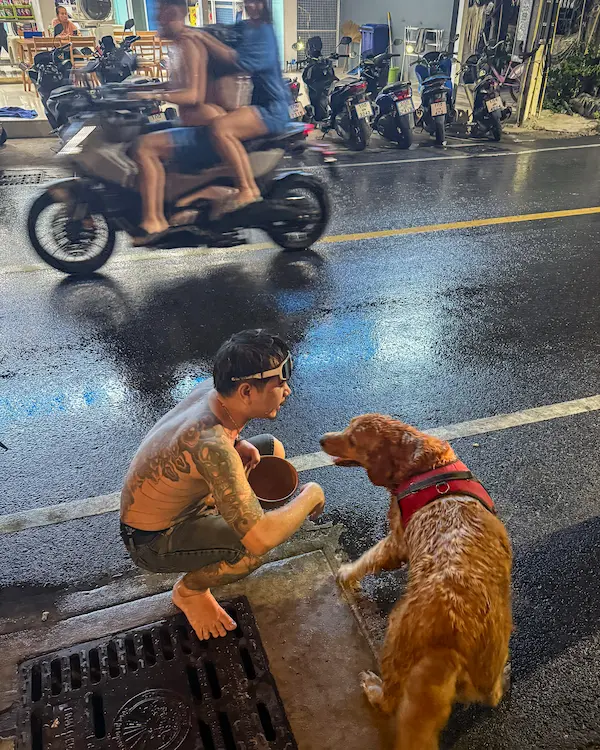
Real moments rarely happen in perfect conditions.
Rain, movement, imperfect lighting, environmental clutter, and brief human interactions are often part of what makes documentary-style travel photography feel believable.
This image works less because of technical perfection and more because it preserves atmosphere honestly — a fleeting interaction on a rainy Phuket street that feels observed rather than staged.
Strong travel photography storytelling depends heavily on this sense of honesty. Viewers do not always connect with photographs because they are visually flawless. They connect because the image feels emotionally sincere.
This is also why observational photography often carries more long-term weight than heavily staged content. When photographers pay attention to how places actually feel rather than how they are expected to look online, the resulting images tend to carry more emotional depth.
In many cases, honesty is what transforms a photograph from simple visual content into something people genuinely remember.
Human Judgement Still Matters In The AI Era
Photography is entering a period where technology can automate more than ever before.
Cameras can recognise scenes instantly. Editing software can remove distractions with a single click. Artificial intelligence can generate entirely fictional travel images that look convincing at first glance. In many ways, the technical barrier to creating visually impressive photographs has never been lower.
But despite all of that, human judgement still matters enormously.
Technology can help produce cleaner images, faster workflows, and even entirely new creative possibilities. What it cannot fully replace is the human ability to recognise emotional significance inside ordinary moments. That interpretation still comes from experience, observation, curiosity, and attention.
This is one reason travel photography storytelling remains deeply connected to human perspective. Two people can stand in exactly the same environment with access to the same technology and still produce photographs that feel completely different emotionally. The difference usually comes from what each person chooses to notice and why they believed that moment mattered.
AI is becoming increasingly effective at reproducing aesthetics. It can imitate colour palettes, compositions, lighting styles, and even emotional visual language surprisingly well. But strong photography is rarely built from aesthetics alone. Meaningful images often contain lived experience, environmental awareness, and subtle emotional interpretation that come from physically existing inside a moment rather than simply generating a visual approximation of one.
That does not mean technology should be feared or rejected. Most photographers already use technology constantly throughout their workflow. The important thing is understanding that tools are still secondary to judgement.
Real travel photography also contains imperfections that are difficult to artificially reproduce in convincing ways. A photograph may be slightly unbalanced, partially obstructed, or captured a fraction of a second before or after technical perfection. Yet those imperfections are often part of what makes the image feel emotionally believable.
Special moments work similarly.
A genuine smile during conversation, a brief interaction between strangers, or a quiet expression that appears unexpectedly for only a second usually carries emotional context beyond what is visible inside the frame itself. The photograph feels meaningful because the moment actually existed. It was witnessed rather than constructed entirely from visual references or aesthetic patterns.
AI can reproduce the appearance of emotion remarkably well. But lived moments still carry a depth of unpredictability and human context that is much harder to imitate convincingly over time.
 Documentary photograph captured at Kata Beach in Phuket.
 AI-generated interpretation of a similar beach scene.
Both images are visually convincing in different ways, and the AI-generated version reproduces atmosphere and environmental realism surprisingly well.
The differences become more noticeable through longer observation. The documentary photograph feels slightly more incidental and behaviourally unpredictable, while the AI-generated image feels more composed within the environment.
The distinction is subtle — and becoming smaller rapidly.
AI can reproduce the appearance of emotion remarkably well. But lived moments still carry a depth of unpredictability and human context that is much harder to imitate convincingly over time.
And that remains a very human skill.
Better Photography Usually Starts Before The Shutter
Improving your photography often has less to do with reacting faster and more to do with noticing more.
Many photographers spend years focusing almost entirely on camera settings, editing techniques, or equipment upgrades while giving far less attention to observation itself. But in travel photography especially, stronger images are often created by understanding environments before trying to capture them.
Good travel photography storytelling usually begins with awareness.
That awareness can be very simple. Watching how light changes across a location during different parts of the day. Noticing where people naturally pause or gather. Recognising how weather changes atmosphere. Paying attention to rhythm, movement, silence, or interaction instead of immediately searching for the most visually dramatic composition.
Patience matters more than many people expect.
Some of the strongest travel photographs happen because a photographer stayed in one place long enough for something meaningful to unfold naturally. A reflection appears after rain. A conversation briefly changes someone’s expression. A shaft of light moves through a street at exactly the right moment. These situations are difficult to force, but they become easier to recognise when photographers slow down and engage more deeply with their surroundings.
This is also why constantly rushing between locations can sometimes weaken photography rather than improve it. When every destination becomes a checklist, photographers often capture only surface-level visuals before moving on again. Slower observation usually creates stronger emotional understanding of a place, and that understanding tends to appear inside the photographs themselves.
Strong travel photography storytelling is rarely built from taking hundreds of random photographs and hoping one works later. More often, it comes from learning how to recognise moments that already contain atmosphere, emotion, or meaning before pressing the shutter.
And that is a skill developed through attention far more than technology.
The Photos People Remember Usually Felt Real
When people remember a travel photograph years later, they usually are not remembering camera settings, editing techniques, or technical specifications.
They remember how the image felt.
They remember the atmosphere of the street after rain. The quietness of an early morning beach. The exhaustion on someone’s face at the end of the day. The warmth of light moving through a café window. The feeling that the photograph captured something emotionally truthful rather than simply visually impressive.
That is often the difference between images that briefly attract attention and images that stay with people long after they have scrolled past them.
Memorable travel photography storytelling tends to preserve presence rather than perfection. The photograph feels connected to a real moment in time instead of existing only as polished visual content. Even years later, the image can still communicate atmosphere, emotion, or human experience in a way that feels believable.
This is also why quieter photographs often age better emotionally than highly trend-driven imagery. Social media aesthetics change constantly. Editing styles come and go. Popular compositions become overused. But photographs built around observation, honesty, and atmosphere usually retain their emotional weight because they are connected to something more timeless than visual trends.
In many ways, the strongest travel photographers are not simply documenting destinations. They are learning how to preserve fragments of lived experience.
And viewers can often feel that difference instinctively, even if they cannot fully explain why.
Conclusion
Some travel photographs stay with us because they capture more than appearances.
They preserve atmosphere, emotion, timing, and small details that make a moment feel human long after it has passed. The image may not always be technically perfect or dramatically edited, but it carries a sense of presence that feels emotionally believable. Viewers are not simply looking at a destination. They feel connected to an experience.
That is ultimately what strong travel photography storytelling tries to achieve.
In an online world increasingly filled with visual repetition, polished aesthetics, and algorithm-driven imagery, photographs that feel grounded and honest often stand out more over time. Not because they are louder, but because they feel observed rather than manufactured.
Good travel photography storytelling is rarely only about finding beautiful locations or owning expensive equipment. More often, it comes from paying attention. Watching how people interact with environments. Recognising atmosphere. Understanding rhythm, weather, light, behaviour, and emotion well enough to notice when something meaningful briefly appears in front of the camera.
Those moments are usually temporary.
A passing expression. A quiet interaction. Rain moving through a street. Light changing for only a few seconds before disappearing again.
But when they are observed honestly, they can become the photographs people continue remembering years later — not simply because of what the place looked like, but because of what it felt like to be there.
Photography becomes far more rewarding when it moves beyond simply collecting images and starts becoming a way of observing the world more carefully.
At Reflections Photography, the focus is not just on camera settings or gear reviews. It is about learning how to recognise atmosphere, understand environments, and create photographs that feel grounded, believable, and emotionally connected to real experience.
Explore more articles on visual storytelling, observation, documentary-style travel photography, and practical real-world photography throughout the site.
Frequently Asked Questions
What is travel photography storytelling?
Travel photography storytelling is the process of using photographs to communicate atmosphere, emotion, context, and human experience rather than simply documenting locations. Strong travel photography storytelling helps viewers understand how a place felt, not just what it looked like.
Why do some travel photos feel more memorable than others?
Memorable travel photographs usually contain emotional realism, atmosphere, timing, and observation. Images often become more powerful when they capture genuine moments, environmental context, or human behaviour rather than focusing only on technical perfection or dramatic editing.
Is expensive camera gear necessary for good travel photography?
No. While good equipment can help in certain situations, strong travel photography storytelling depends far more on observation, timing, awareness, and understanding environments. Many memorable travel photographs are created with simple equipment because the moment itself carries emotional impact.
What makes travel photography feel authentic?
Authentic travel photography usually feels grounded in real experience. Natural behaviour, believable atmosphere, environmental details, and emotional honesty all help photographs feel more human and less staged. Imperfections can sometimes strengthen authenticity rather than weaken it.
Why do overly edited travel photos sometimes feel artificial?
Excessive editing can remove natural light, texture, mood, and environmental realism from an image. While dramatic edits may attract quick attention online, they can sometimes weaken the emotional credibility of a photograph and make destinations feel visually interchangeable.
How can photographers improve observation skills while travelling?
Observation improves when photographers slow down and spend more time watching environments before shooting. Paying attention to changing light, weather, movement, behaviour, and atmosphere often leads to stronger visual storytelling and more emotionally engaging images.
Does AI change the future of travel photography?
AI is changing photography workflows and visual creation rapidly, but human judgement still plays a major role in meaningful photography. Travel photography storytelling still depends heavily on recognising emotionally important moments, atmosphere, and lived experience in real environments.
Why do quieter travel photos often feel more emotional?
Quieter photographs often feel more believable because they reflect ordinary human experience. Small moments such as rain passing through a street, people interacting naturally, or subtle changes in atmosphere can sometimes create stronger emotional connection than highly dramatic scenes.