
Busy Scenes — How to Simplify Without Overthinking
$7.00
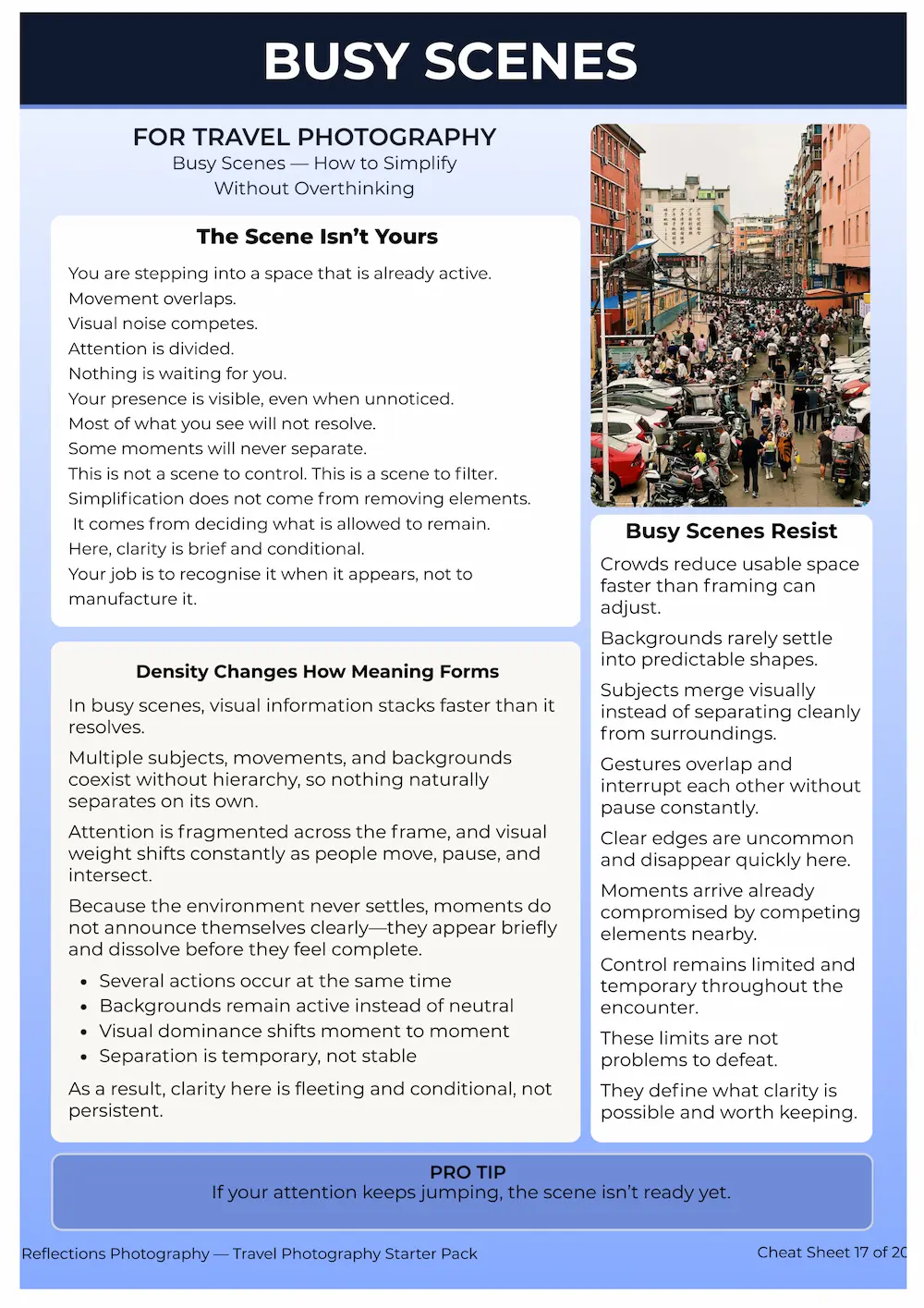
Busy Scenes — How to Simplify Without Overthinking helps you photograph complex travel environments without becoming overwhelmed by visual clutter. This cheat sheet explains how to recognise the most important element in a scene and simplify the frame so the photograph feels clearer and more intentional.
Designed for travellers photographing markets, streets, and crowded places, it helps you make quick compositional decisions without overthinking every detail.
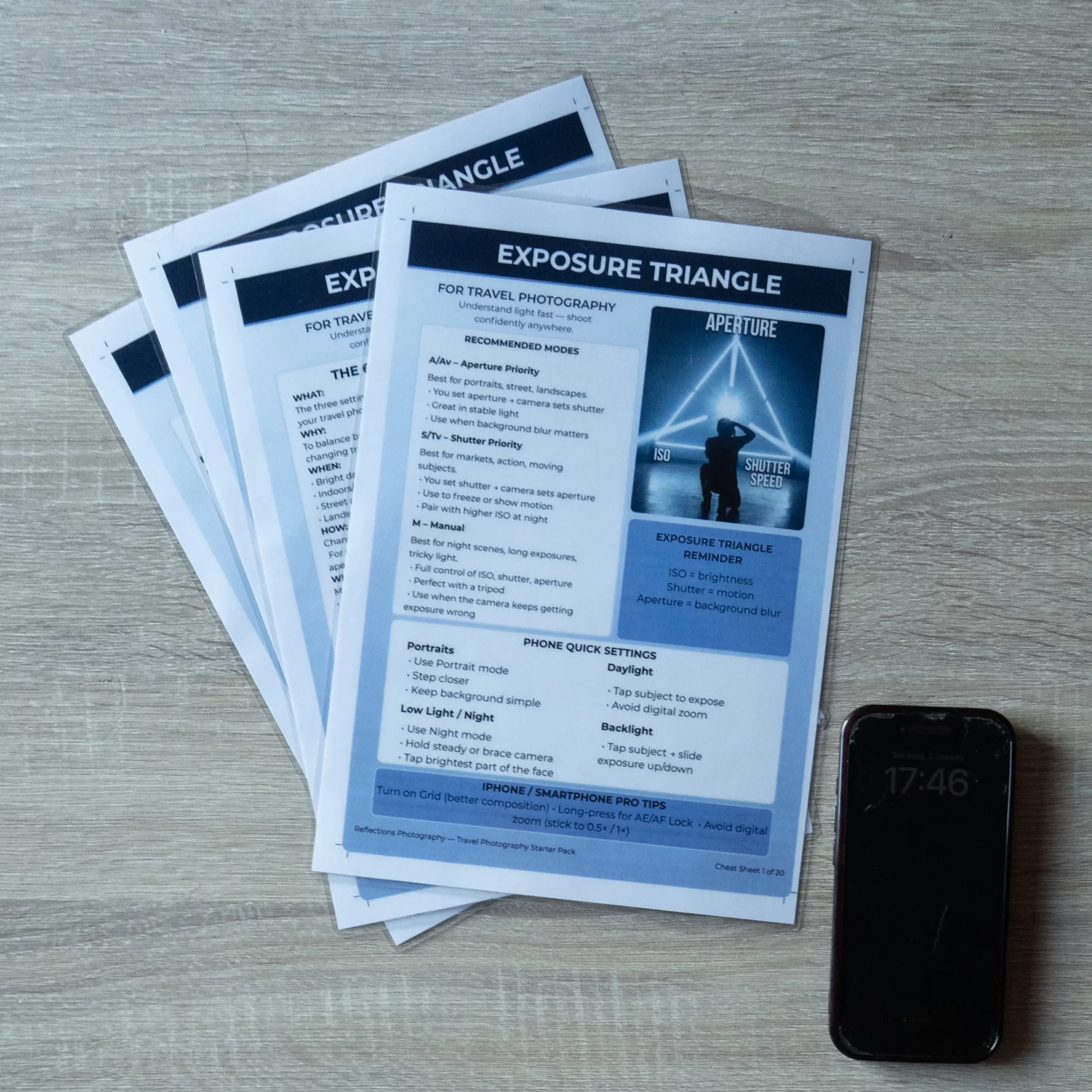
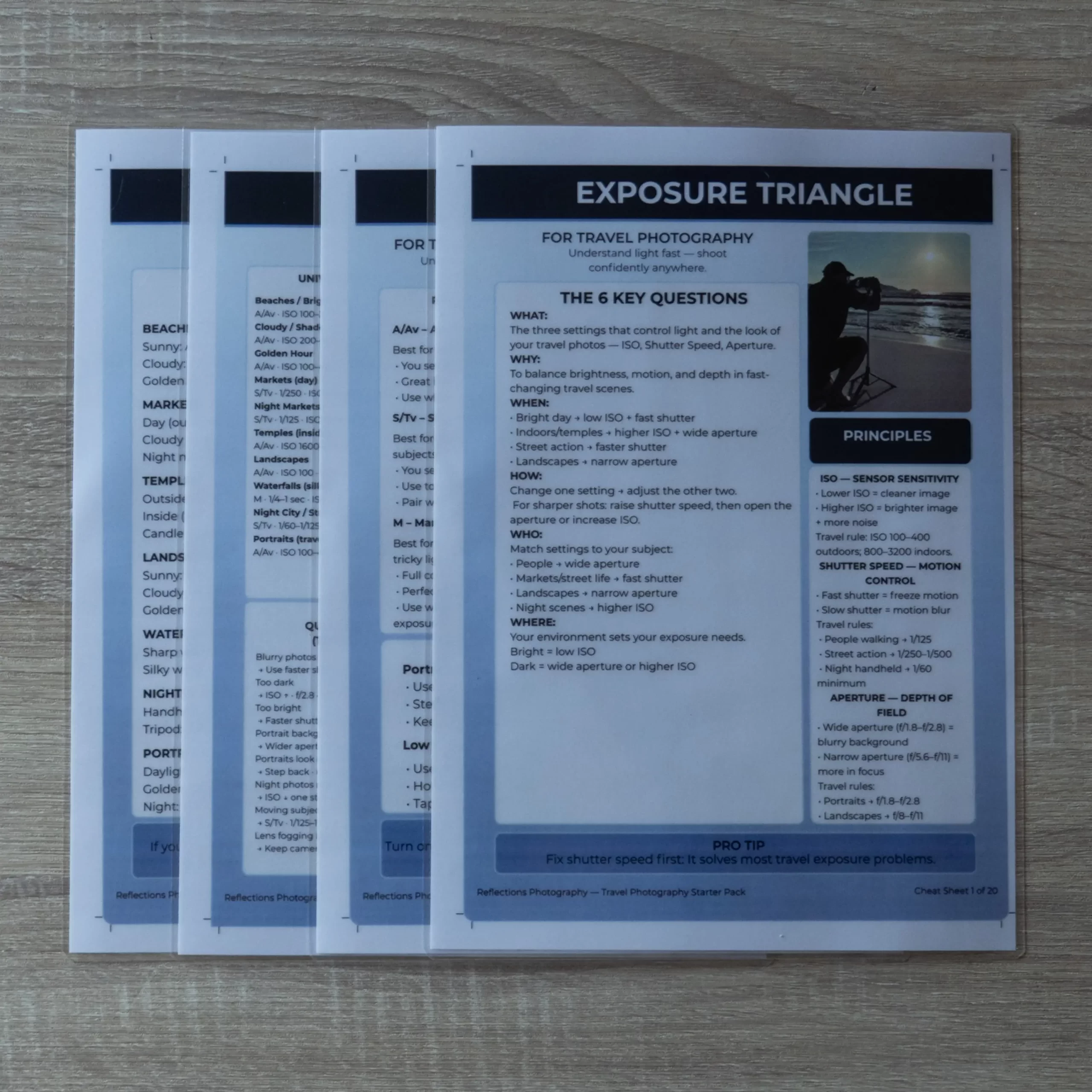
Includes: Printable A4 PDF + phone-friendly version.
Description
Busy Scenes — How to Simplify Without Overthinking focuses on one of the biggest challenges in travel photography: photographing environments that contain too many visual elements at once. Busy streets, markets, festivals, and crowded public spaces often feel exciting in person but confusing when translated into a photograph.
This cheat sheet helps you recognise how to simplify these scenes quickly.
What you’ll get (digital download):
Printable PDF (A4) + phone-friendly version
Simple guidance for identifying the main subject in busy scenes
Practical techniques for reducing visual clutter
Clear compositional ideas for simplifying complex environments
Quick decisions when everything in the frame feels distracting
Who it’s for:
Travellers photographing busy streets and markets
Photographers overwhelmed by complex scenes
Anyone wanting clearer travel compositions
Many travel environments are visually dense. Signs, colours, people, vehicles, and architectural details may all compete for attention at the same time. While these elements contribute to the energy of the place, they can easily create photographs that feel chaotic or difficult to understand.
The key to photographing busy scenes is not removing everything — it is choosing what matters most.
This cheat sheet helps you recognise the strongest element in the scene and build the photograph around it. Once a clear subject is identified, the rest of the composition can support that subject rather than compete with it.
Small adjustments often make a significant difference. Changing your position by a few steps, shifting the camera angle slightly, or waiting for movement to pass through the frame can simplify a complex scene dramatically.
Timing also plays an important role. In busy environments people move constantly, which means the composition changes from moment to moment. Waiting briefly can allow distracting elements to leave the frame or create a clearer arrangement of subjects.
The guide also encourages photographers to recognise natural visual structure. Light, shadows, colour contrasts, and repeating patterns often help organise complex scenes in ways that feel more readable.
For beginners, this cheat sheet removes the frustration of trying to photograph environments that appear too chaotic. Instead of trying to control everything in the frame, you learn to recognise one strong visual anchor.
For more experienced photographers, it acts as a reminder that simplification often comes from observation and small adjustments rather than complicated compositional rules.
Busy travel scenes are full of life and visual interest. Busy Scenes — How to Simplify Without Overthinking helps you translate that complexity into photographs that feel clear, intentional, and engaging.
Reviews
There are no reviews yet.