
stop the scroll
Season 1: Stand Out Now
Episode 10
When Simpler Is Stronger
Why leaving things out can make your photos feel more confident
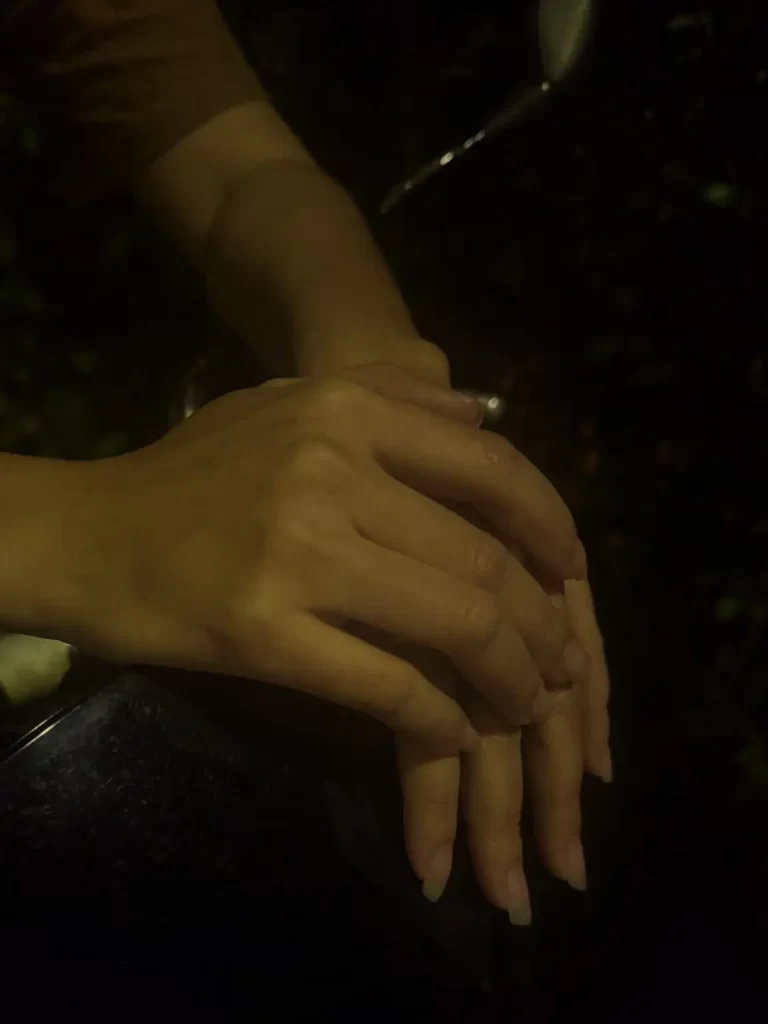
There’s a type of photo almost everyone has on their phone.
It isn’t “bad.”
It isn’t blurry.
It’s just… noisy.
You can tell what you were trying to capture, but the photo feels like it’s talking over itself.
Too many things are happening at once.
Too many small details are asking for attention.
And the result is a photo that feels “fine”… but not memorable.
This is where a lot of people make the same mistake.
They try to fix the photo by adding more.
More background.
More story.
More context so the viewer understands what mattered in the moment.
But strong photos rarely win by explaining everything.
They win by choosing what matters most — and clearing space around it.
The problem
Most photos don’t fall flat because they’re missing something.
They fall flat because they’re carrying too much.
On a phone screen, the viewer isn’t studying your photo like a painting.
They’re giving it a fast glance.
And in that first glance, the brain is asking a simple question:
What am I meant to look at?
If the photo answers clearly, the viewer stays.
If the photo answers with ten possibilities, the viewer moves on.
This is why “busy” photos disappear.
Not because the content is bad — but because the viewer can’t find the priority.
And here’s the tricky part:
When you’re standing in the scene, you already know what mattered.
You remember the smell, the sound, the feeling, the reason you lifted the phone.
But the viewer doesn’t have your memory.
They only have what’s inside the frame.
So if the frame is crowded, your meaning gets buried.
The shift
Instead of asking “How do I capture all of this?” ask:
What is the simplest version of this moment?
That question changes how you shoot.
Because “simplest version” doesn’t mean boring.
It means focused.
It means you’re willing to leave good things out so the best thing can be seen.
And that’s what makes a photo feel confident.
A confident photo doesn’t try to prove itself.
It doesn’t shout.
It simply places your attention where it wants it… and lets you sit there.
When simplicity wins
Simplicity is strongest when the scene already has “too much going on.”
Think about real life:
- a street with scooters, signs, wires, people, light patches, shadows
- a table with plates, drinks, hands, phones, cutlery, menus
- a shopfront with posters, reflections, bright colours, text everywhere
In those scenes, “capturing everything” usually creates a photo that feels like a screenshot of reality.
And screenshots rarely stand out.
But a simple choice inside a busy scene?
That’s where strong photos happen.
One person, one gesture, one shape, one light patch, one clear subject — held still while everything else stays background.
That’s not “less effort.”
That’s better priority.
Do this (the subtraction rule)
This is a simple practice you can do anywhere.
When you find a scene you want to photograph, don’t shoot immediately.
First, decide your subject in one sentence.
This photo is about…
Now apply the subtraction rule:
Remove one thing from the frame before you take the photo.
Not later.
Not with editing.
Right now, with your position and framing.
“Remove one thing” can look like:
- step left so a bright sign leaves the edge
- lower the phone to hide messy background behind your subject
- wait two seconds for a person to walk out of the background
- move closer so a distracting object disappears
- move back so the subject has breathing room and reads clearly
Then take the photo.
If you want a second shot, do the rule again.
Remove one more thing.
You’ll feel the photo getting calmer in real time.
And you’ll start trusting that “less” can look stronger.
A simple self-check
After you take the photo, do a quick glance test.
Look at it for two seconds, then ask:
- Is the subject obvious without thinking?
- Do the edges feel clean, or do they feel noisy?
- Does anything else compete for “first attention”?
If something competes, you don’t need a new technique.
You need one more subtraction.
That’s the whole skill.
What you’ll notice right away
- Your photos feel calmer and easier to understand.
- You start seeing distractions before you shoot.
- Your subject looks more intentional without any “effects.”
- You take fewer photos and keep more of them.
Simplicity isn’t about having less to show.
It’s about making what you do show… land harder.
What comes next
In the next episode, we talk about cropping — and why it feels like cheating when it shouldn’t.
Done well, cropping is just another way of choosing what matters most.
Want personal feedback on your photos?
Send one image and I’ll tell you what’s working, what’s holding it back, and what to do next.