
Shutter Speed First — Solving 80% of Travel Photography Problems
$7.00
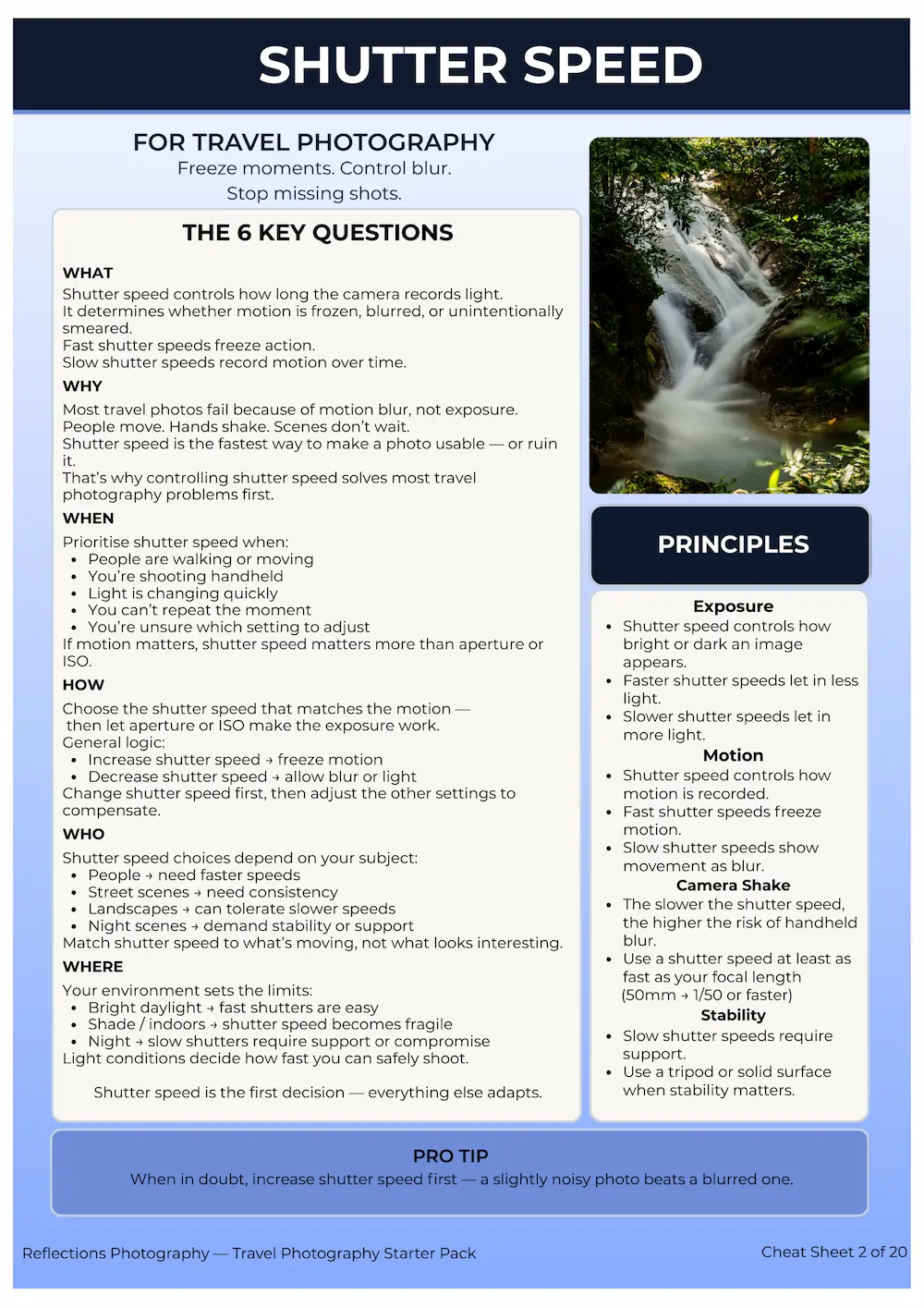
Shutter Speed First — Solving 80% of Travel Photography Problems is a practical decision guide built around one simple truth: most travel photos fail because the shutter speed was wrong for the situation.
This cheat sheet shows you how to choose a safe shutter speed in seconds and how to adjust when your subject or your hands are moving.
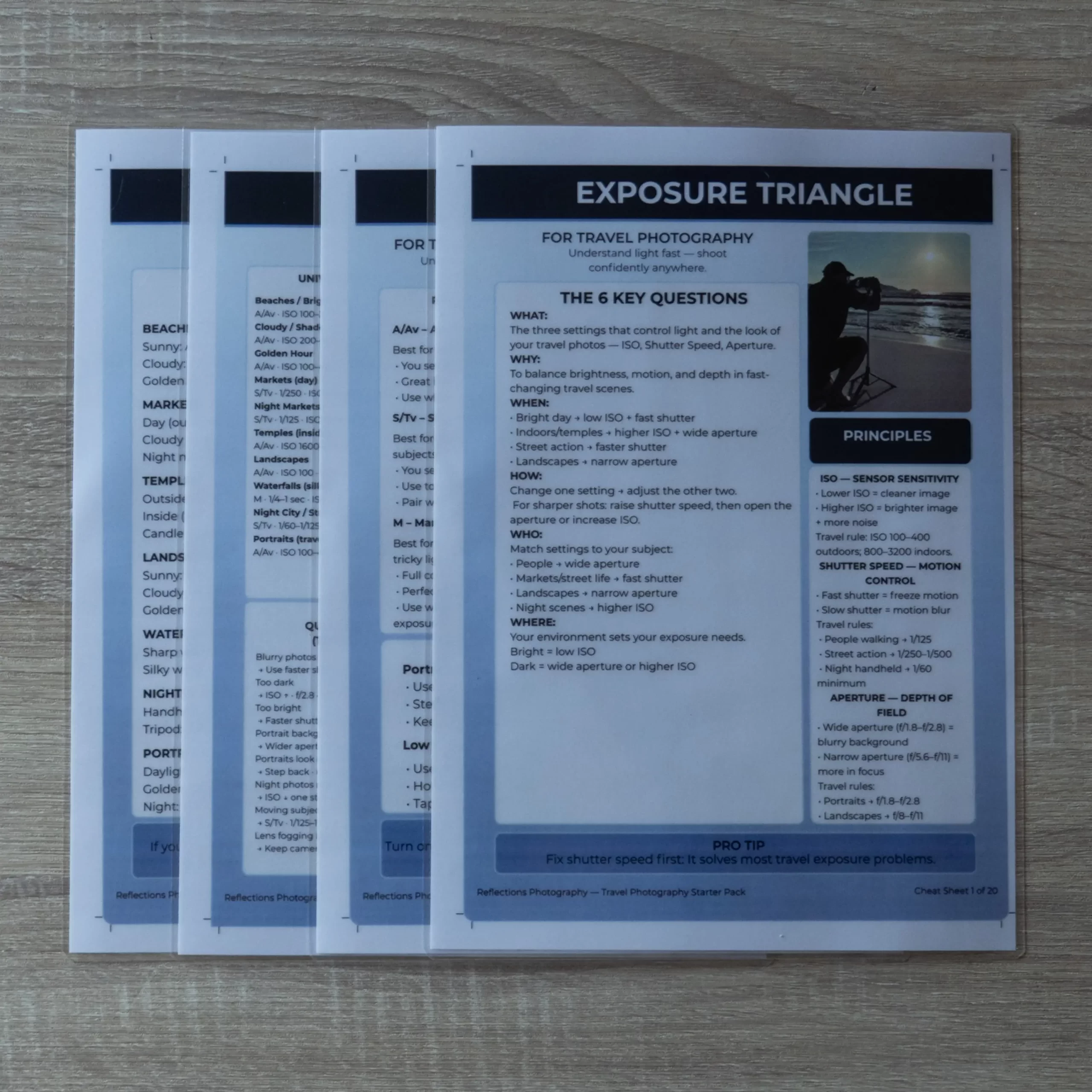
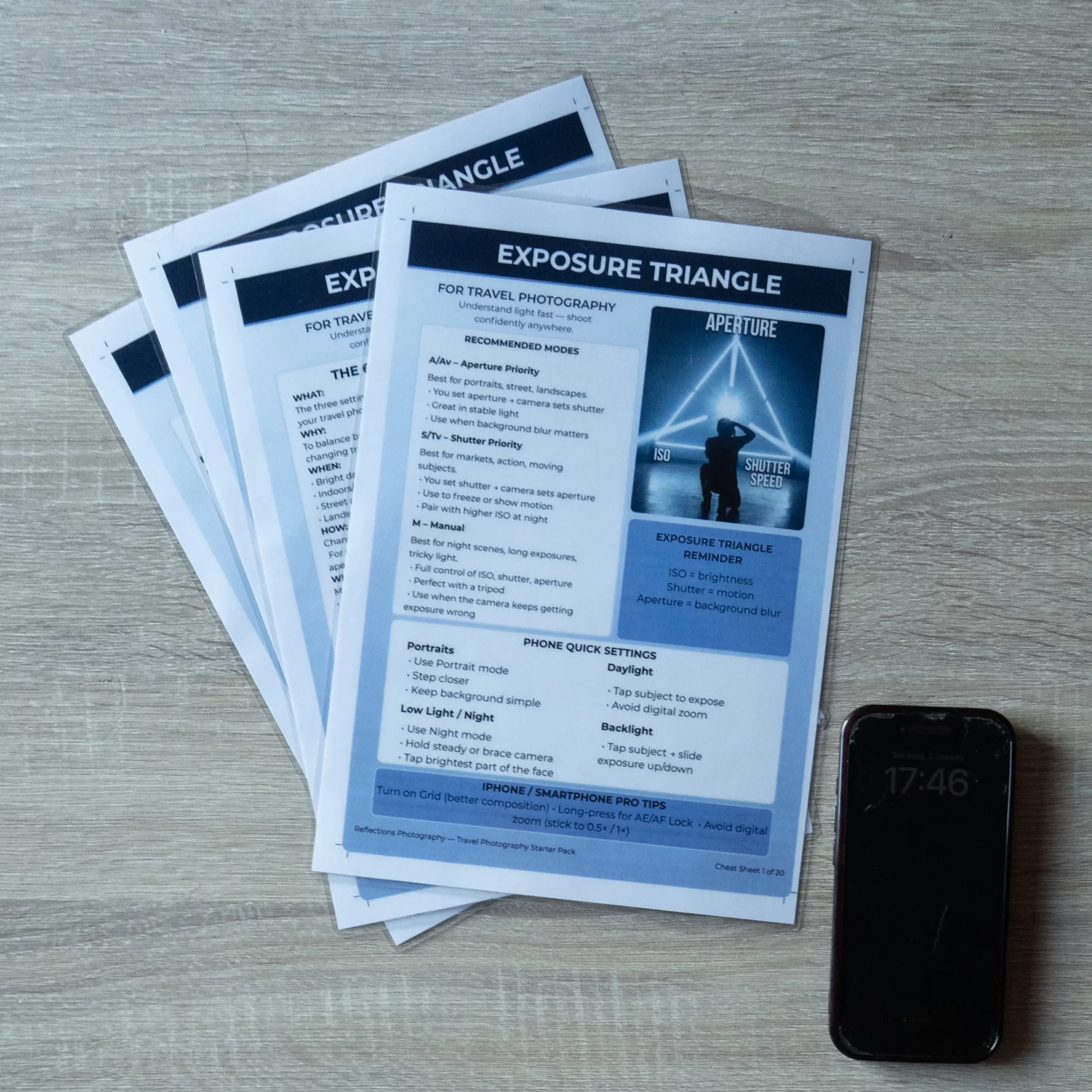
Includes: Printable A4 PDF + phone-friendly version.
Description
Shutter Speed First — Solving 80% of Travel Photography Problems is a practical decision guide built around one simple truth: most travel photos fail because the shutter speed was wrong for the situation. This cheat sheet helps you choose a safe shutter speed quickly so you capture sharper images while travelling.
What you’ll get (digital download):
Printable PDF (A4) + phone-friendly version
“Start here” shutter speed ranges for common travel scenes
Fast blur diagnosis: subject motion vs camera shake
Simple rules for low light, crowded streets, and moving people
Quick fixes when you can’t use a tripod
Who it’s for:
Beginners who keep getting soft images and don’t know why
Intermediate photographers who want faster, more reliable decisions
Anyone shooting travel moments handheld, in real light and real movement
Travel photography is full of movement. Even when you feel like you’re standing still, you’re often walking, turning, reacting to something happening around you, or raising the camera quickly as a moment appears. That’s why shutter speed quietly becomes the most important setting for capturing sharp travel images.
Many people first learn photography through the exposure triangle and start by thinking about brightness. But in real travel environments, sharpness often matters before perfect exposure. A slightly noisy image can still be a great travel photo. A slightly underexposed image can often be corrected later. A blurred image usually cannot.
This cheat sheet is designed to make shutter speed your first decision so you stop missing moments because the camera selected a speed that was too slow.
One of the biggest frustrations in travel photography is blur that looks like poor focus. Sometimes it is focus, but very often it is motion blur. Either the subject moved, you moved, or both moved at the same time. This guide helps you recognise the difference quickly so you can correct the problem without guessing.
If your subject is blurred but the background is sharp, the problem is usually subject movement. If the entire frame looks soft, it is often camera shake. Once you understand the difference, adjusting shutter speed becomes a simple and reliable fix.
The cheat sheet provides practical starting points for common travel situations such as photographing street scenes, people in motion, performances, moving vehicles, and low-light environments where cameras often choose shutter speeds that are too slow for handheld shooting.
It also covers situations that quietly cause problems for travellers: dim temples, indoor restaurants, evening streets, or markets at night. Your subject may appear still, but your hands are never perfectly steady. In these moments shutter speed quietly decides whether the photo is sharp or soft.
Because travel photography often happens quickly, the guide focuses on simple decisions that can be made in seconds. You lift the camera, frame the scene, and take the photo. If the shutter speed is too slow, the image will be soft even if everything else was technically correct.
Thinking “shutter speed first” dramatically reduces mental load. Instead of trying to balance every setting at once, you decide whether the moment requires freezing motion or allowing movement. Once that decision is made, the rest of the exposure becomes easier to manage.
If a faster shutter speed is required, you know your options: open the aperture, raise ISO, or increase available light. If the scene allows a slower shutter speed, you can maintain lower ISO and cleaner image quality.
The sheet also shows how motion can be used creatively without ruining the photograph. Travel scenes often contain energy — people walking through streets, scooters passing, crowds moving through neon light. The guide helps you choose shutter speeds that keep the scene readable while still showing that movement.
Because many travellers shoot with both phones and cameras, the advice is written so it still makes sense even if your device hides manual controls. Phones still make shutter-speed decisions internally, and understanding the trade-offs helps you stabilise the device, recognise difficult situations, and increase your chances of capturing a sharp frame.
If you want a single cheat sheet that improves your travel photos quickly, this is it. Shutter Speed First trains you to make one smart decision fast — and that decision solves a huge percentage of real-world travel photography problems.
Reviews
There are no reviews yet.