Aperture Made Easy: Depth of Field Without the Jargon
Estimated read time: 18–20 minutes
If you’ve ever looked at a portrait and thought, “Why does the background melt away like butter?”—that’s aperture at work. Aperture shapes depth of field and decides how much of your scene appears sharp. Open it wide and you get creamy background blur; stop it down and you get edge-to-edge detail. In this friendly, real-world guide, we’ll keep the tech light and the tips practical. No jargon gymnastics—just what to set, why it works, and how to make the look you love on a camera or a smartphone.
Aperture, in plain language (what the f-numbers mean)
Aperture is the adjustable opening inside your lens. We write it as f/1.8, f/2.8, f/4, f/5.6, f/8, f/11, f/16 and so on.
- Lower f-number (f/1.8, f/2.8) → wider opening, more light, shallower depth of field → stronger background blur.
- Higher f-number (f/8, f/11, f/16) → smaller opening, less light, deeper depth of field → more of the scene looks sharp.
Lenses also have a sweet spot—usually 2 stops down from their widest aperture. A common f/1.8 prime, for example, is tack-sharp around f/4. At very small apertures (often f/16–f/22) many cameras show diffraction—fine detail looks a touch softer. Keep that in mind for landscapes.
Depth of field: the look you’re really choosing
Depth of field (DoF) is the slice of space that looks acceptably sharp in front of and behind your focus point. Four things shape it:
- Aperture: the main lever—lower f-number = shallower DoF.
- Subject distance: closer focus = shallower DoF.
- Focal length: longer lenses appear to give shallower DoF at the same framing.
- Sensor size: larger sensors (full-frame) yield shallower DoF for the same field of view and aperture.
Easy mental model: imagine a cone of focus starting at your lens. Open the aperture and the cone narrows (thin slice). Close it and the cone widens (thick slice).
Extra blur without buying gear
- Increase subject-to-background distance. Even 1–2 meters helps massively.
- Step closer to your subject.
- Use a longer focal length (85–135 mm for portraits is classic).
- Choose simple backgrounds—distance + simplicity make bokeh look clean.
Where aperture lives in the exposure triangle (quick refresher)
Aperture is one corner of the exposure triangle with shutter speed (time) and ISO (sensitivity). Open the aperture for blur and you let in more light, which allows a faster shutter or lower ISO. Stop down for detail and you let in less light, which may require a slower shutter or higher ISO. Pick the look first; use shutter/ISO to support it.
A no-stress workflow for picking aperture
- Decide the story. Portrait blur? Environmental detail? Macro texture?
- Pick the mode.
- A/Av (Aperture Priority): You set f-stop; camera chooses shutter. Use Exposure Comp to nudge brightness.
- M (Manual): You set f-stop and shutter; ISO or meter balances exposure.
- Start with a sensible f-stop (tables below).
- Focus with intent. Portraits → nearest eye. Landscapes → one-third into the scene or hyperfocal.
- Zoom in, review, refine. Too much blur? Stop down. Too busy? Open up or move the background away.
Real-world starting points (you’ll actually use)
| Scene / Goal | Aperture | Why | Support Settings |
|---|---|---|---|
| Portrait, creamy blur | f/1.8–f/2.8 | Isolate subject | 1/125–1/250s; Auto ISO; eye AF |
| Street/travel context | f/4–f/5.6 | Subject + environment | ~1/250s; ISO 100–400 |
| Group portrait | f/4–f/5.6 | Keep faces sharp | 1/160s+; arrange faces on one plane |
| Landscape, corner-to-corner | f/8–f/11 | Deep detail, minimal diffraction | Base ISO; tripod if slow |
| Architecture | f/8–f/11 | Crisp edges and corners | Manual focus, correct verticals |
| Food/product | f/2.8–f/5.6 | Pop with enough detail | Window light; tripod |
| Macro | f/8–f/16 | DoF razor-thin up close | Tripod; focus stacking helps |
Portraits people love (how aperture gets you there)
Pick your vibe
- Dreamy/romantic: f/1.4–f/2.
- Natural/flattering: f/2–f/2.8.
- Environmental: f/3.5–f/5.6.
Distance is magic
Push your subject away from the background. A two-meter gap can turn a cluttered wall into creamy tone at f/2.8.
Focus and shutter
Use single-point or Eye AF on the nearest eye. Keep shutter 1/125–1/250s to freeze micro-movement. If only one eyelash is sharp, back up slightly or stop down to f/2.8–f/4.
Three budget heroes
- 35 mm f/1.8: storytelling portraits, include environment.
- 50 mm f/1.8: classic look, low-light friendly.
- 85 mm f/1.8: flattering compression; bokeh champ.
Backlit beach? Meter for the face or dial +0.3 to +1.0 exposure comp to avoid dull skin tones.
Landscapes without fuzz (hyperfocal—made simple)
You want sharp foreground rocks and far mountains. Your friend is hyperfocal distance—the focus distance that gives you the deepest DoF for a chosen focal length and aperture. Focus there and everything from roughly half that distance to infinity looks sharp.
No-math method (works anywhere)
- Set f/8–f/11 at ISO 100.
- Compose; focus roughly one-third into the scene (a mid-distance rock or bush).
- Use magnified Live View to check a near rock and the horizon; nudge focus until both look crisp.
- Use a 2-sec timer on a tripod; turn stabilization off.
Hyperfocal by the numbers (handy examples)
(Approximate values; “FF” = full-frame, “APS-C” uses 1.5× crop.)
- FF 16 mm @ f/11 → H ≈ 0.8 m (so focus ~0.8 m; sharp from ~0.4 m to infinity).
- FF 24 mm @ f/11 → H ≈ 1.8 m (sharp from ~0.9 m to infinity).
- APS-C 16 mm @ f/8 → H ≈ 1.6 m (sharp from ~0.8 m to infinity).
- APS-C 35 mm @ f/8 → H ≈ 7.7 m (sharp from ~3.8 m to infinity).
You don’t need to memorize these—just remember: wider lens + smaller aperture = nearer hyperfocal.
Sunstars, diffraction, and tiny apertures
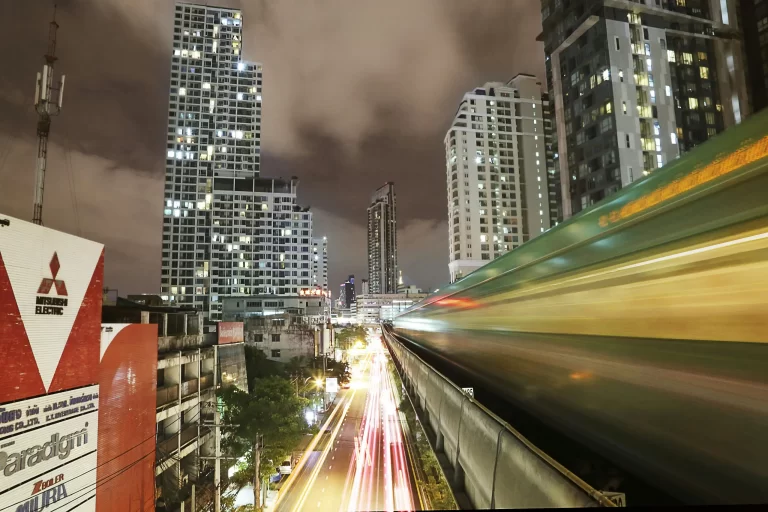
Sunstars happen when you stop down and include a bright point (the sun or streetlights) in the frame. The number of rays usually equals the number of aperture blades (or double, depending on design).
- For bold sunstars, try f/16–f/22.
- Shade the lens with your hand to avoid veiling flare.
- Focus a touch in front of infinity so the foreground still looks good.
Diffraction: at very small apertures (f/16–f/22), light bends around the aperture blades and softens fine detail. It’s not a disaster—just a trade.
- Use f/8–f/11 for maximum sharpness.
- Go to f/16 if you need depth or sunstars and accept a little softness.
- If the scene allows, focus stack two frames (near + far) at f/8–f/11 for ultra-clean detail.
Creative bokeh: designing the blur
Bokeh isn’t only how much blur you have; it’s how it looks.
- Round highlights come from wide apertures and lenses with more rounded blades (often 9).
- Cat’s-eye bokeh appears at frame edges when the lens vignettes—often at wide apertures.
- Onion-ring bokeh shows in specular highlights with some aspherical elements; it’s a lens signature, not a flaw you can “fix.”
Make bokeh prettier
- Put distance and darkness behind your subject; bright, distant points turn into beautiful bokeh balls.
- Avoid chaotic textures (twigs, wire mesh) right behind your subject at f/1.4–f/2—they can look nervous.
- Sometimes f/2.8 looks cleaner than f/1.4. Use the least blur that achieves your separation.
Macro & close-up: why everything goes mushy
At macro distances, DoF becomes paper-thin—even f/11 leaves most of a petal soft.
What works
- f/8–f/16, tripod, and focus stacking if your subject sits still.
- Align the plane of focus with your subject (shoot flowers more head-on).
- Add light (small LED, reflector) so you can keep ISO low and shutter reasonable.
Budget options
- Extension tubes and close-up lenses turn normal lenses macro. Expect narrower DoF; stabilize carefully.
Street & travel: depth with a dash of context
Street is about timing and story. Aperture supports both.
- Zone focus: Set f/8, pre-focus to 2–3 m, and you can catch split-second moments without waiting for AF.
- Subject pop: Switch to f/2–f/2.8 when a single person needs to stand out from the market chaos.
- Shutter safety: Aim for 1/250s; raise ISO rather than risk motion blur.
Smartphones: aperture when you don’t have a dial
Phones usually have a fixed physical aperture, but they simulate shallow depth with Portrait mode and handle low light by stacking frames. You can still steer depth and background blur.
DoF on a phone—what helps
- Back up and use the tele camera (2× or 3×). Tele compresses perspective and improves software blur.
- Create separation—pull your subject 1–2 m from the background.
- Adjust simulated f-stop after shooting (most phones allow it); watch hair and glasses edges.
- Pick simple backgrounds; busy edges can confuse segmentation.
- For landscapes, tap to focus one-third into the scene and drag the exposure slider to protect highlights. Stabilize on a railing and let Night mode work at low ISO.
Phone “bokeh fails” to avoid
- Hair against dense foliage.
- Transparent objects (glasses, netting).
- Blown highlights behind the subject (the blur halo will look fake).
When Portrait mode struggles, step your subject farther from the background and shoot with the tele lens in good light. You’ll get a natural-looking blur even without the effect.
Common mistakes (and easy fixes)
Only one eyelash is sharp.
Back up a step or stop down from f/1.8 → f/2.8–f/4; keep shutter ≥1/125s.
Landscapes still soft at f/16.
You’re hitting diffraction or missing focus. Try f/8–f/11, focus one-third in, and use a tripod.
Group shots—front row sharp, back row soft.
Use f/4–f/5.6, arrange heads on a single plane, and step back slightly.
Messy background even at f/2.8.
Increase subject-to-background distance or change angle to place a cleaner background. Longer focal length helps.
Banding/flicker indoors.
Not an aperture issue: try 1/50 (50 Hz regions) or enable anti-flicker.
Four mini case studies (settings + thought process)
1) Golden-hour portrait on the beach
- Goal: Soft, romantic background, tack-sharp eyes.
- Settings: f/2 • 1/250s • ISO 100–200, Eye AF, +0.3 EC against backlight.
- Why: f/2 gives separation; 1/250s freezes small movements.
- Edit: Subject mask + small exposure lift; keep background clarity low.
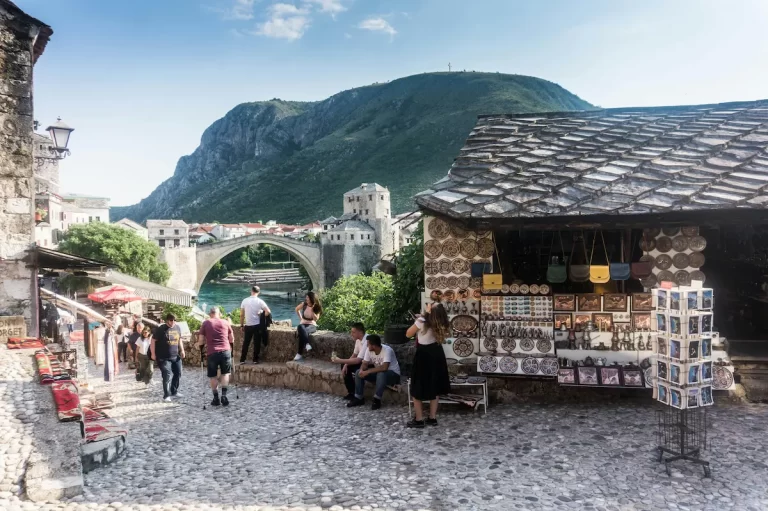
2) Old Town streets — environmental portrait
- Goal: Subject stands out but shopfronts remain readable.
- Settings: f/3.5 • 1/250s • ISO 200–400.
- Why: Slight blur for separation; enough DoF for context.
- Tip: Place the subject 1–2 m from the nearest wall; it cleans the bokeh.
3) Freedom Beach seascape
- Goal: Foreground rock + horizon sharp.
- Settings: f/11 • 0.5–2 s • ISO 100, CPL, tripod, focus one-third into scene.
- Why: f/11 for depth; slow shutter for soft water; low ISO for clean color.
- Edit: Lower highlights in foam; a hint of dehaze in distance.
4) Macro flower in shade
- Goal: Petals and stamens sharp; background soft.
- Settings: f/11 • 1/60s • ISO 400, small LED fill, tripod.
- Why: f/11 stretches DoF; added light holds ISO down.
- Bonus: If wind calms, shoot a stack at f/8 for razor detail.
45-minute practice plan (camera or phone)
Set A (15 min): Portrait blur
- Photograph the same person at f/2, f/2.8, f/4.
- Repeat with the subject 1 m farther from the background.
- Which change mattered more—aperture or distance?
Set B (15 min): Landscape sharpness
- Shoot f/5.6, f/8, f/11, f/16 from a tripod.
- Focus one-third in; use live view to check near + horizon.
- Compare corners and micro-contrast.
Set C (15 min): Street context vs. pop
- Zone focus at f/8 for candid moments.
- Switch to f/2.8 for a subject-isolating frame of the same spot.
- Review how mood changes.
Take quick notes in your phone. After two sessions, aperture choices start to feel automatic.
Myths to drop today
- “f/22 is always sharpest for landscapes.” Not on most cameras—f/8–f/11 usually wins.
- “Full-frame is the only way to get blur.” It helps, but distance, focal length, and background choice deliver stunning blur on any system.
- “Portraits must be shot wide open.” Often pretty, but f/2.8–f/4 can be more flattering and reliable.
- “Prime lenses are the only ‘pro’ choice.” Primes are great; modern zooms are excellent. Choose based on look and flexibility.
Quick-reference table (bookmark this)
| Goal | Aperture | Focus Point | Extra Tip |
|---|---|---|---|
| Creamy single-person portrait | f/1.8–f/2.8 | Nearest eye | Add background distance |
| Two-person portrait | f/2.8–f/4 | Between faces | Keep heads on one plane |
| Group of 4–8 | f/4–f/5.6 | 2nd row | Back up a little |
| Travel street scene | f/4–f/5.6 | Subject | 1/250s to avoid motion blur |
| Environmental portrait | f/3.5–f/5.6 | Eyes | Include context, simplify background |
| Landscape | f/8–f/11 | 1/3 into scene | Tripod; 2-sec timer; IBIS off |
| Macro flower | f/8–f/16 | Critical detail | Stack if calm |
| Food/product | f/2.8–f/5.6 | Front edge | Side window light + reflector |
make it happen
If this clicked, take aperture for a spin this week:
- Photograph the same subject at f/2, f/4, f/8, f/11.
- Move your subject two meters from the background and try again.
- Pick the frame where the story feels right—that’s your aperture for this scene.
Ready for guided practice?
- Join our Capture with Confidence course for step-by-step lessons and friendly feedback.
- Download the Night Photography Cheat Sheet so your landscapes are sharp the first time.
- Or learn in the field on a Photography Adventure Tour in Phuket—Freedom Beach sunrise, Old Town light trails, and golden-hour temple portraits. Camera or smartphone welcome.
Master aperture, and you stop hoping for good blur or enough detail—you choose it. That’s control. That’s confidence. And that’s when your photos start looking unmistakably yours.
more resources
- Shutter Speed Made Simple
- Exposure Triangle for Beginners
- ISO Demystified (Clean Images in Any Light)
- Night Photography Cheat Sheet (Downloadable) →
/shop/night-photography-cheat-sheet - Capture with Confidence (Beginner Course)
- Photography Adventure Tours (Phuket)
Further Reading:
Cambridge in Colour (Depth of Field & Bokeh), DOFMaster (hyperfocal charts), Photography Life primers.