Camera Modes Explained — A/Av, S/Tv, M (Travel Context)
$7.00
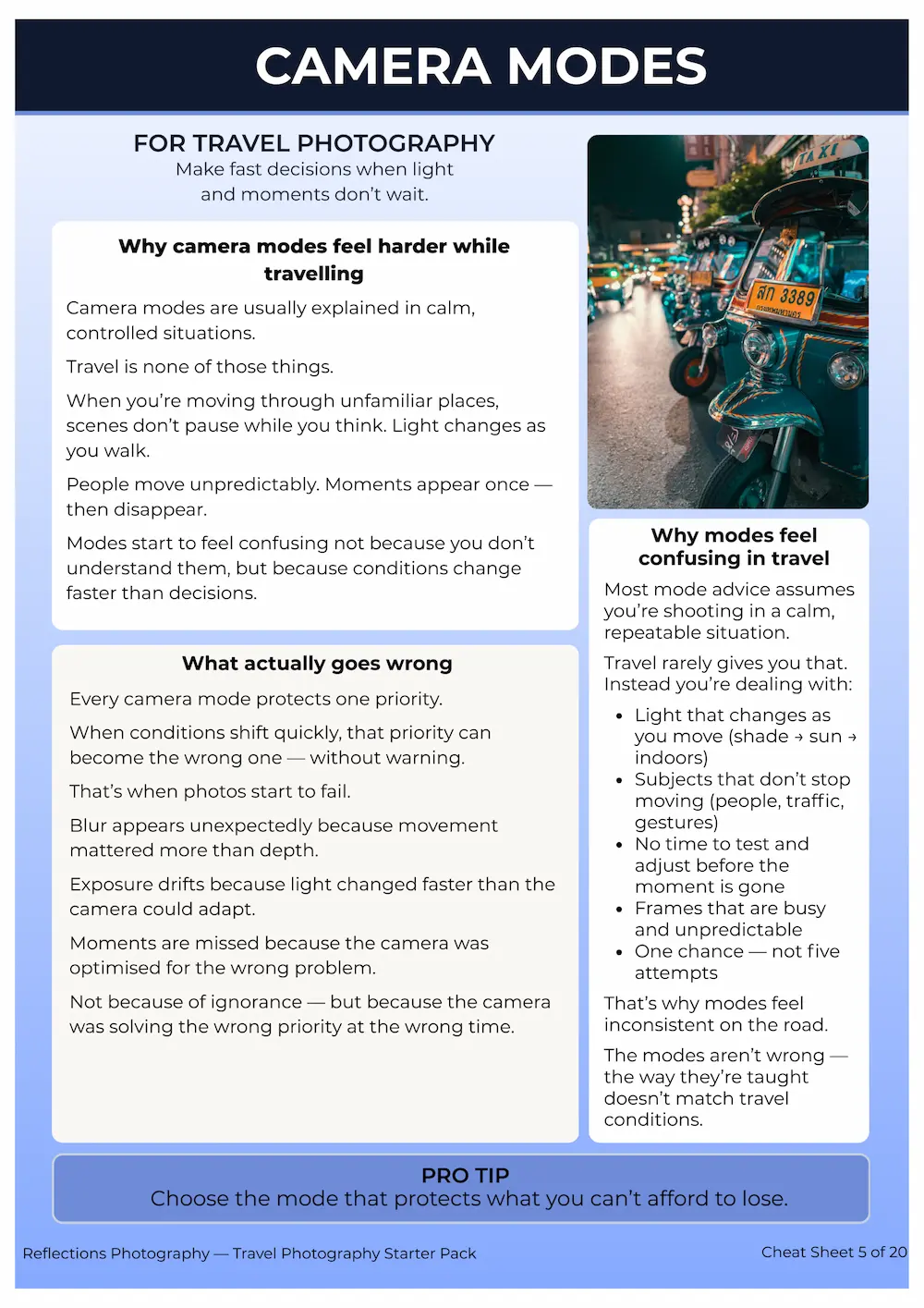
Camera Modes Explained — A/Av, S/Tv, M (Travel Context) helps you understand when to use different camera modes while travelling. This cheat sheet explains the practical differences between Aperture Priority, Shutter Priority, and Manual so you can choose the right mode for the situation without guessing.
Designed for travellers using cameras in changing environments, it gives you a simple way to decide which mode gives you the control you need.
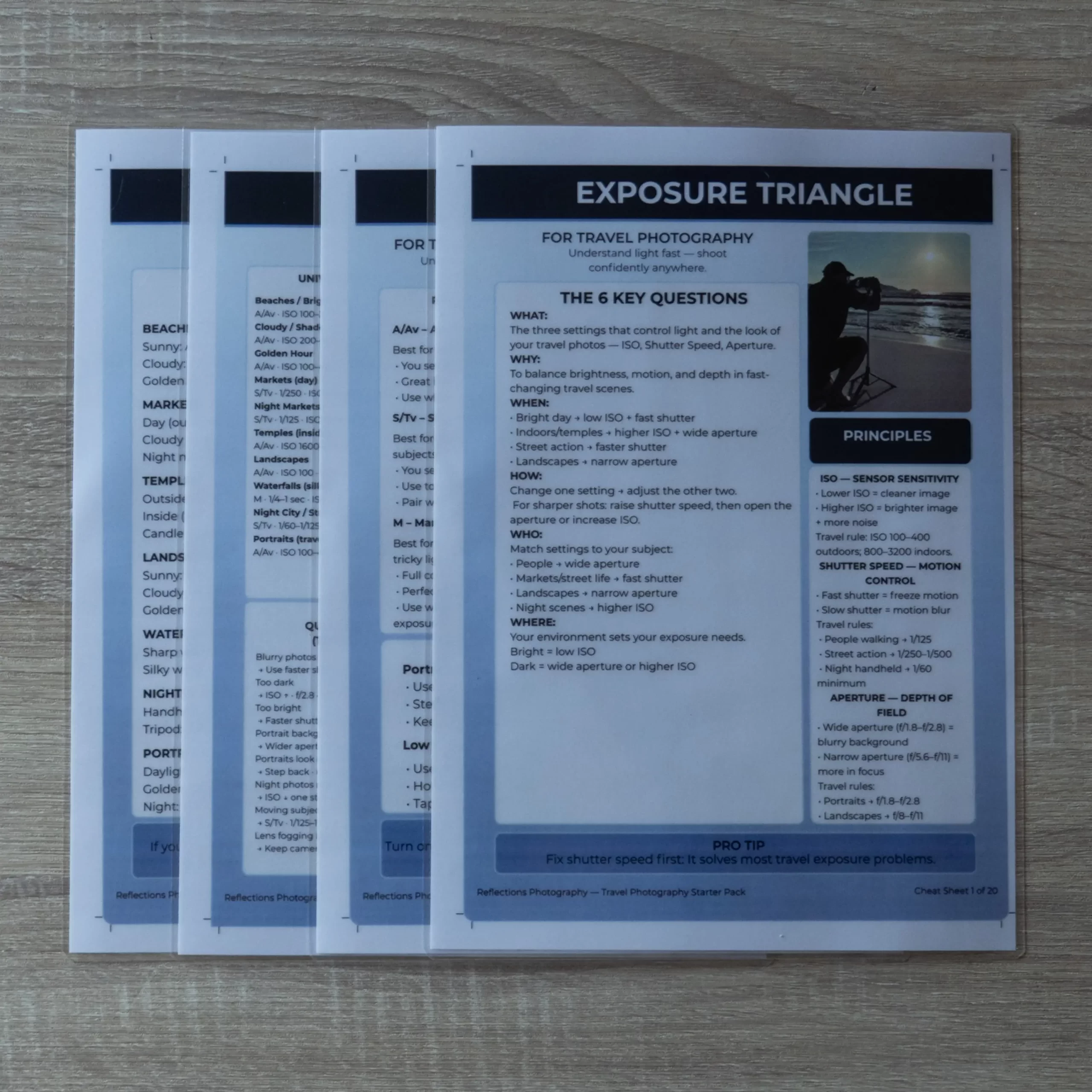
Includes: Printable A4 PDF + phone-friendly version.
Description
Camera Modes Explained — A/Av, S/Tv, M (Travel Context) explains how the main camera modes work and when each one makes sense in real travel photography. Instead of presenting camera modes as technical options, this cheat sheet focuses on how they help you manage different travel situations.
When travelling, scenes change quickly. You might photograph a landscape, then move into a busy market, then step indoors into low light. Understanding which camera mode to use can make these transitions much easier.
What you’ll get (digital download):
Printable PDF (A4) + phone-friendly version
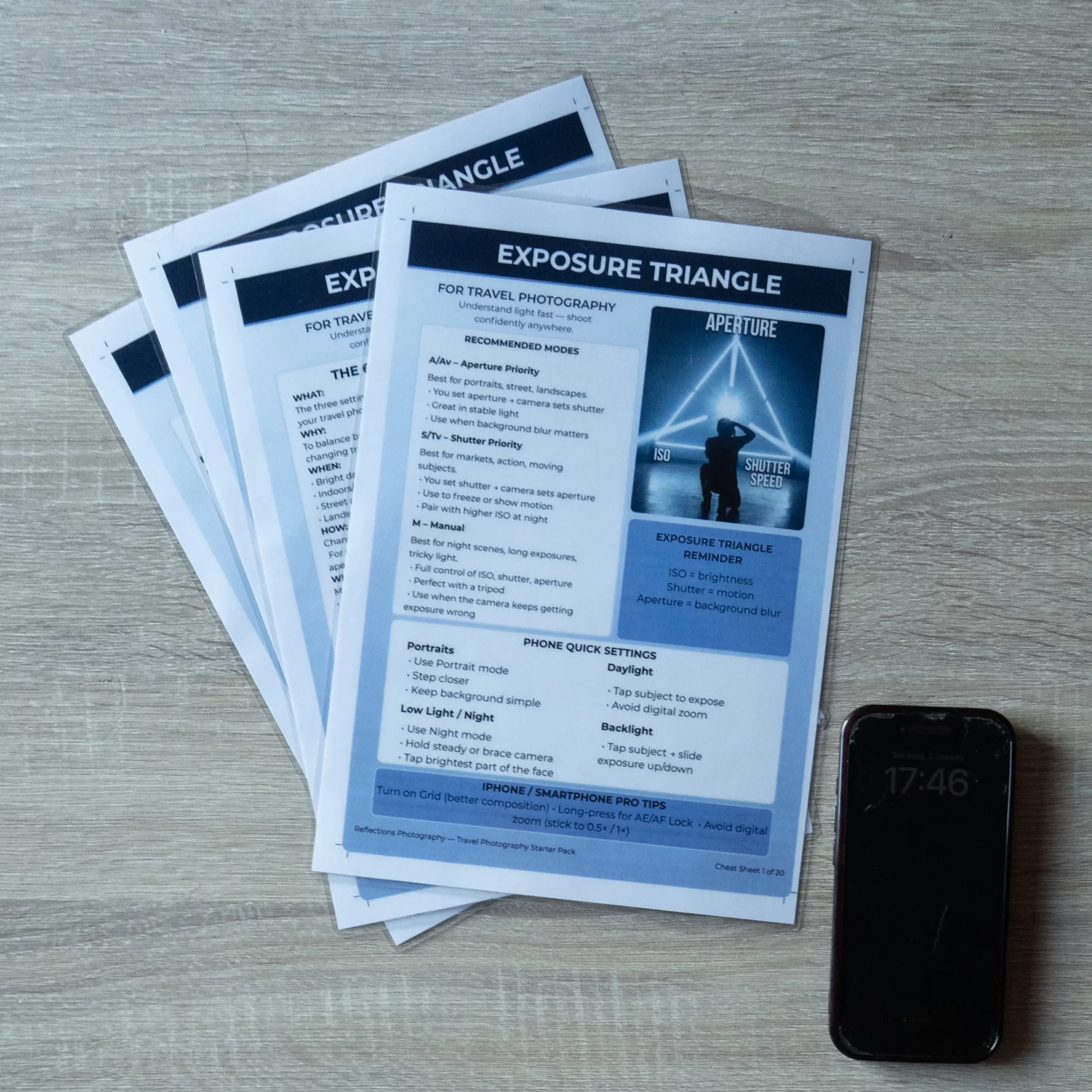
Clear explanation of Aperture Priority (A/Av)
Simple guidance for using Shutter Priority (S/Tv)
Practical overview of Manual mode
Quick decisions for choosing the right mode in travel situations
Who it’s for:
Travellers learning camera controls
Photographers unsure when to switch camera modes
Anyone wanting faster decisions when light or scenes change
Many photographers start with full automatic mode and later discover that their camera offers several different ways to control exposure. These modes can appear confusing at first because they all influence shutter speed, aperture, and ISO in slightly different ways.
This cheat sheet simplifies those options by focusing on what each mode is designed to prioritise.
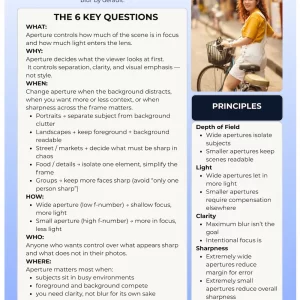
Aperture Priority mode gives you control over depth of field while the camera adjusts shutter speed to maintain exposure. This makes it particularly useful for many travel situations where you want to control how much of the scene appears sharp.
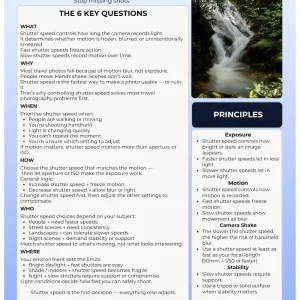
Shutter Priority mode allows you to choose the shutter speed while the camera adjusts aperture automatically. This can be helpful when photographing movement such as street scenes, performances, or vehicles.
Manual mode provides full control over both aperture and shutter speed, allowing you to manage exposure precisely when lighting conditions remain stable or when you want consistent results across multiple images.
Understanding these differences allows you to choose the mode that simplifies your decisions in each situation.
One of the biggest advantages of camera modes is reducing mental load. Instead of controlling every setting all the time, you can choose the mode that prioritises the element that matters most in the scene — depth of field, motion, or consistent exposure.
This cheat sheet helps you recognise which mode will make the moment easier to photograph.
For beginners, the guide removes the confusion around camera modes and explains when each one is useful. For more experienced photographers, it acts as a quick reference that helps reinforce practical decisions when working quickly in changing environments.
Travel photography often requires flexibility and fast decisions. Camera Modes Explained — A/Av, S/Tv, M (Travel Context) gives you a simple framework for choosing the camera mode that supports the photograph you want to capture.
Reviews
There are no reviews yet.