
Aperture for Travel — When Background Blur Matters (and When It Doesn’t)
$7.00
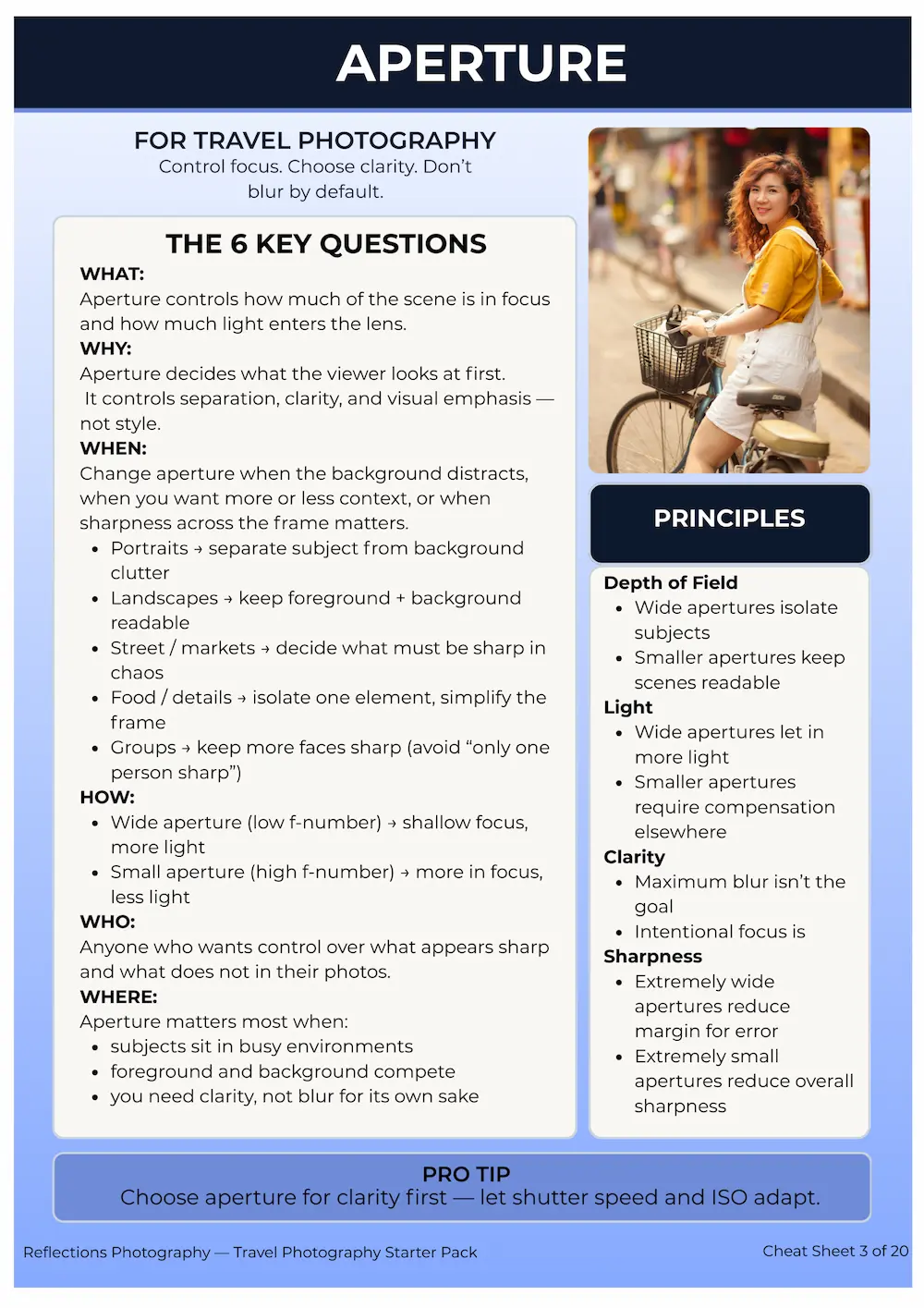
Aperture for Travel — When Background Blur Matters (and When It Doesn’t) helps you understand when aperture actually improves a travel photo and when it doesn’t matter as much as people think. This cheat sheet explains how aperture affects background blur, depth of field, and subject separation so you can make quick decisions while travelling.
Designed for travellers learning how aperture shapes an image, it helps you choose the right depth of field without overthinking camera settings.
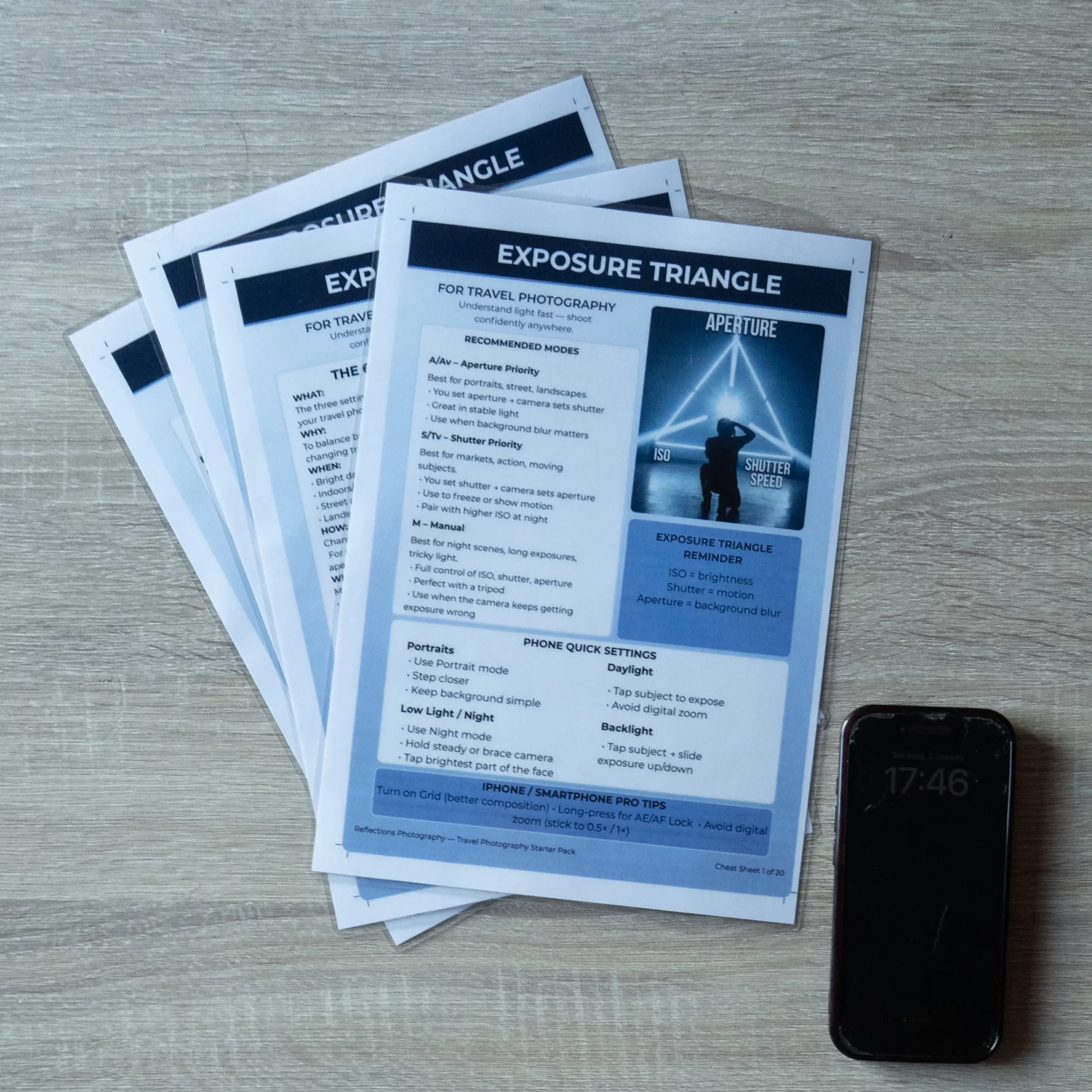
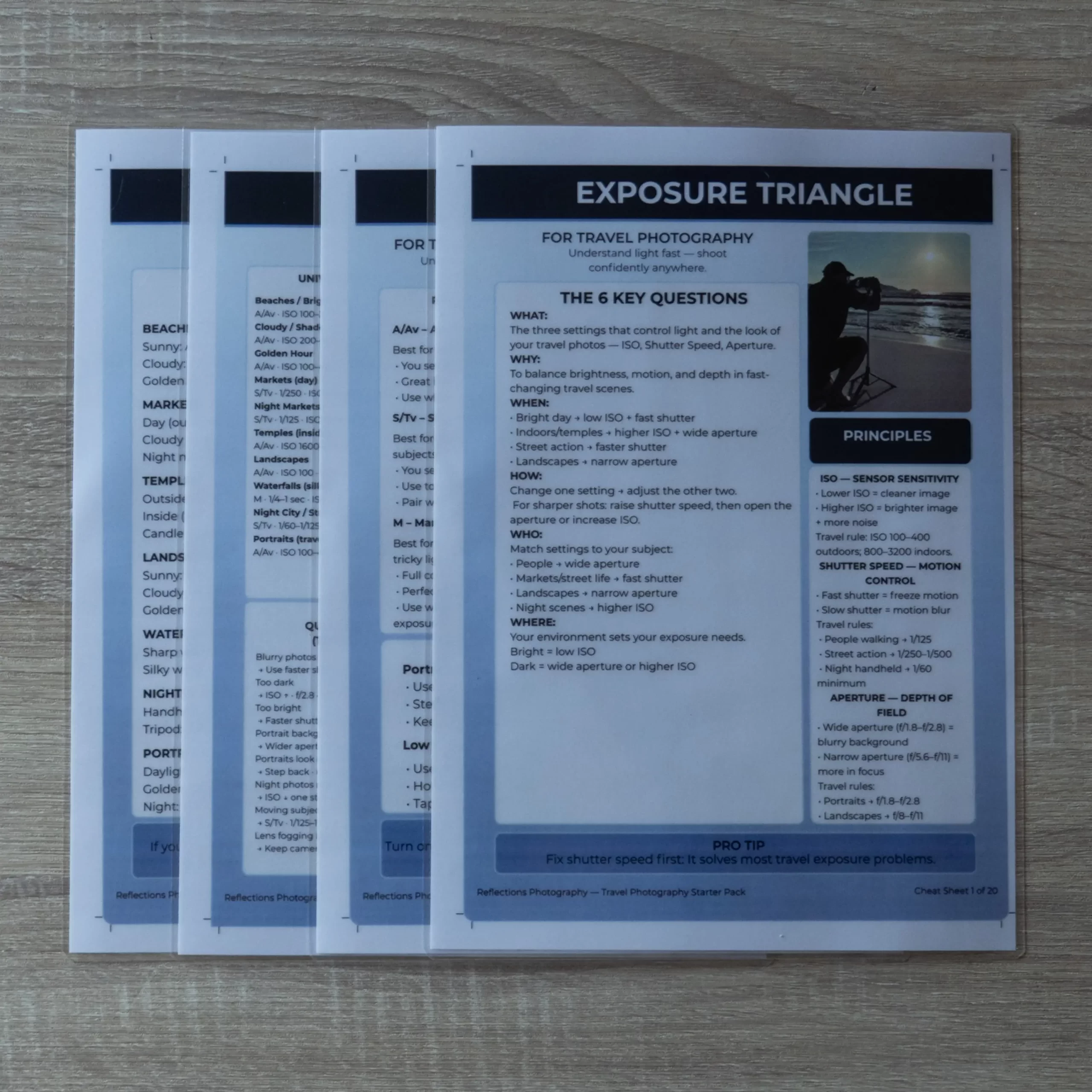
Includes: Printable A4 PDF + phone-friendly version.
Description
Aperture for Travel — When Background Blur Matters (and When It Doesn’t) focuses on one of the most talked-about camera settings in photography: aperture. Many photographers associate aperture mainly with background blur, but in real travel photography the decision is often more practical than that.
This cheat sheet helps you recognise when aperture actually matters and when other factors in the scene are more important.
What you’ll get (digital download):
Printable PDF (A4) + phone-friendly version
Clear explanation of how aperture affects depth of field
Simple rules for using background blur in travel photos
Guidance for when wider apertures improve a scene
Practical decisions for keeping more of the scene sharp
Who it’s for:
Travellers learning how aperture affects their photos
Photographers confused about when to use wide apertures
Anyone wanting more control over background blur and depth of field
Aperture controls how much of a scene appears sharp from front to back. A wider aperture creates a shallower depth of field, which can blur the background and help separate a subject from the surroundings. A narrower aperture increases depth of field, keeping more of the scene in focus.
In travel photography, both approaches can be useful depending on the situation.
Many people first learn about aperture through portrait examples showing strong background blur. While this effect can be beautiful, it is not always the most important priority when travelling. Sometimes the environment itself is part of the story, and keeping more of the scene sharp helps the photograph communicate a sense of place.
This cheat sheet helps you recognise which approach will strengthen the image.
When photographing people, food, or small details, a wider aperture can simplify the frame by softening distracting backgrounds. This allows the subject to stand out clearly and directs attention where you want it.
However, travel photography often includes scenes where context matters: temples, streets, landscapes, architecture, or cultural moments where the environment is just as important as the subject. In these situations a narrower aperture can help maintain clarity across the frame.
Understanding when to use each approach helps you make faster and more confident decisions.
Another common misconception is that wider apertures automatically produce better images. In reality, strong travel photographs often come from recognising the relationship between subject and surroundings. Sometimes the best choice is shallow depth of field. Other times the photograph benefits from keeping the scene readable and connected.
This guide helps you recognise those situations quickly.
The cheat sheet also explains how aperture interacts with other settings. Changing aperture affects exposure and may require adjusting shutter speed or ISO to maintain balance. Understanding this relationship helps you maintain control of the image even as lighting conditions change.
For beginners, this guide removes the confusion around aperture and background blur. Instead of guessing which setting to choose, you learn how to recognise when depth of field will improve the photograph.
For more experienced photographers, it acts as a reminder that background blur is only one creative tool. Travel photography often benefits from choosing the aperture that best communicates the story of the scene.
Aperture for Travel — When Background Blur Matters (and When It Doesn’t) provides a simple, practical framework for understanding depth of field so you can make confident aperture decisions while travelling.
Reviews
There are no reviews yet.