
Exposure Triangle — For Travel Photography
$7.00
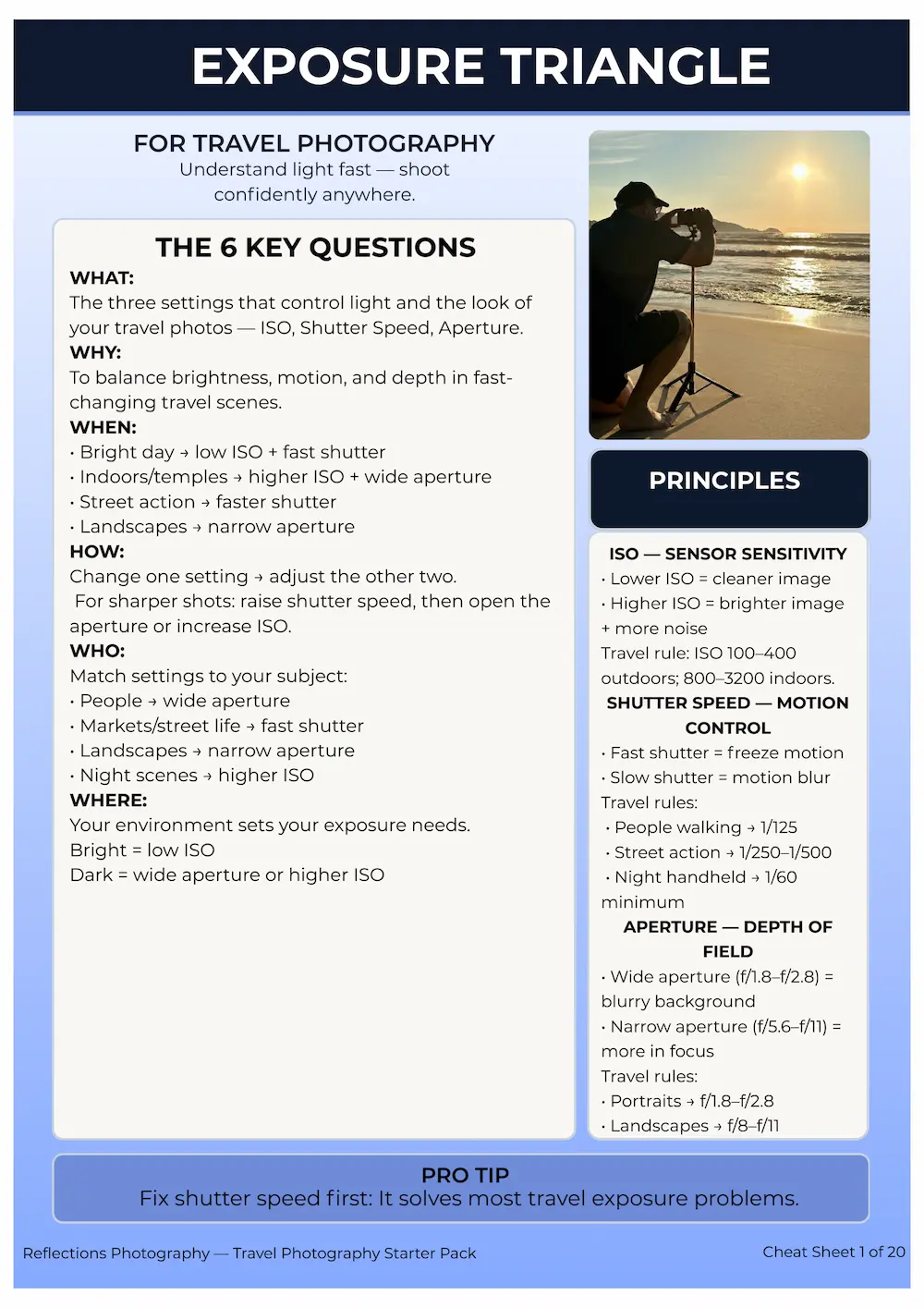
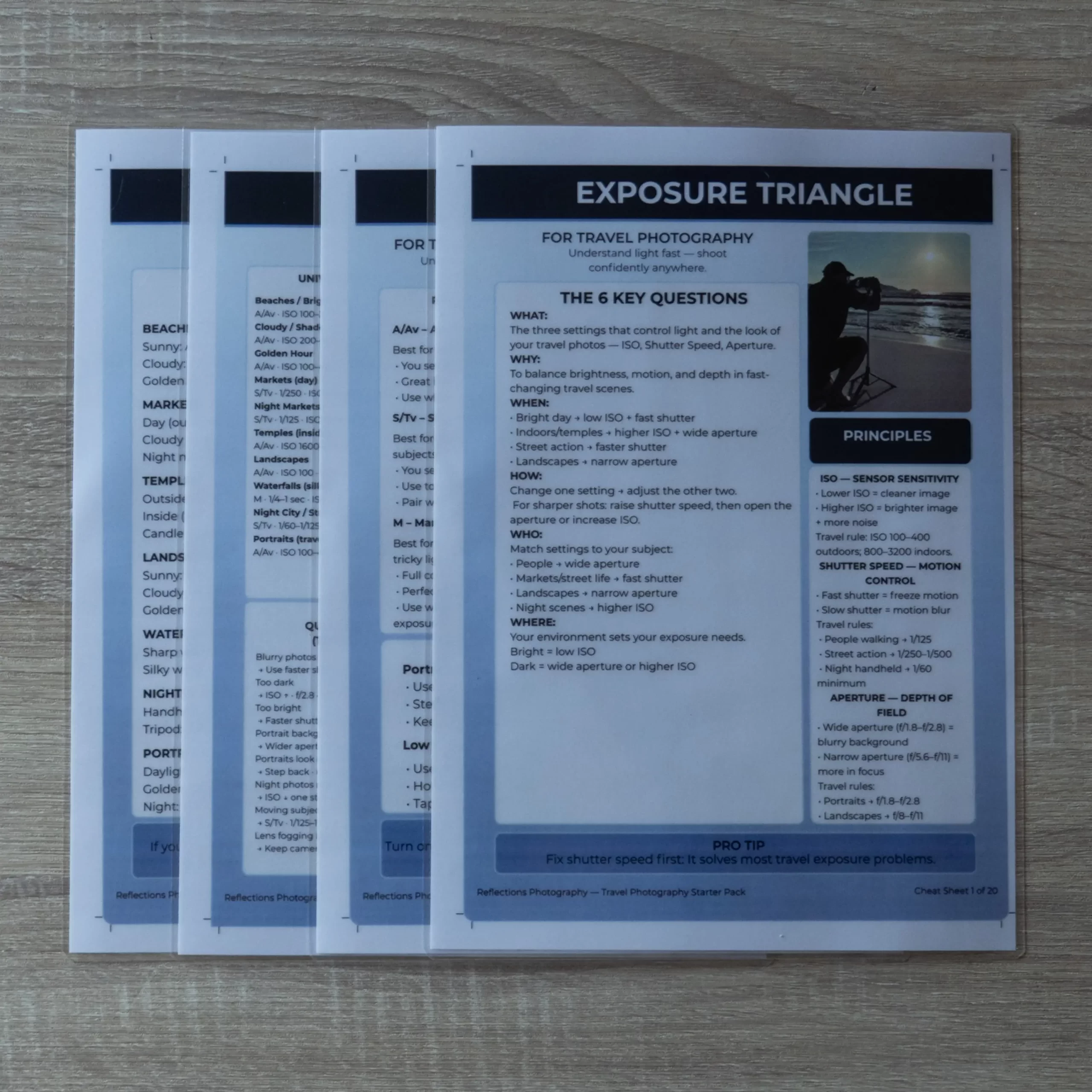
Exposure Triangle — For Travel Photography explains how shutter speed, aperture, and ISO work together in real travel situations. This cheat sheet helps you understand the relationship between the three settings so you can adjust exposure quickly when light changes.
Designed for travellers learning manual photography, it provides a simple visual reference you can use while shooting instead of trying to remember theory.
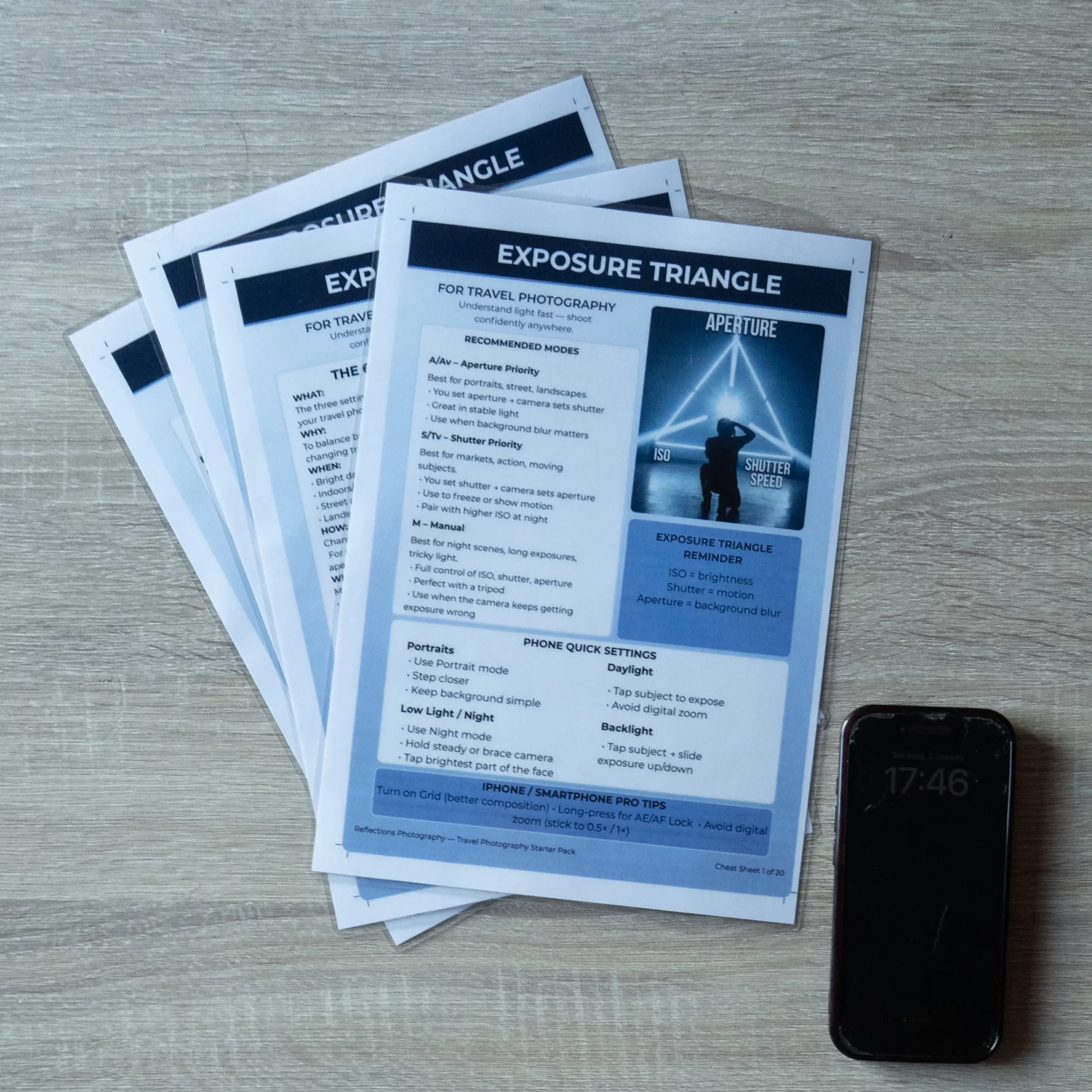
Includes: Printable A4 PDF + phone-friendly version.
Description
Exposure Triangle — For Travel Photography explains one of the most important concepts in photography: how shutter speed, aperture, and ISO work together to control exposure. Instead of presenting the exposure triangle as abstract theory, this cheat sheet focuses on how it applies to real travel photography situations.
When travelling, lighting conditions can change quickly. You might move from bright sunlight into shaded streets, indoor markets, temples, or evening scenes within a short period of time. Understanding how the exposure triangle works allows you to adapt quickly without feeling overwhelmed by camera settings.
What you’ll get (digital download):
Printable PDF (A4) + phone-friendly version
Clear visual explanation of the exposure triangle
Simple relationships between shutter speed, aperture, and ISO
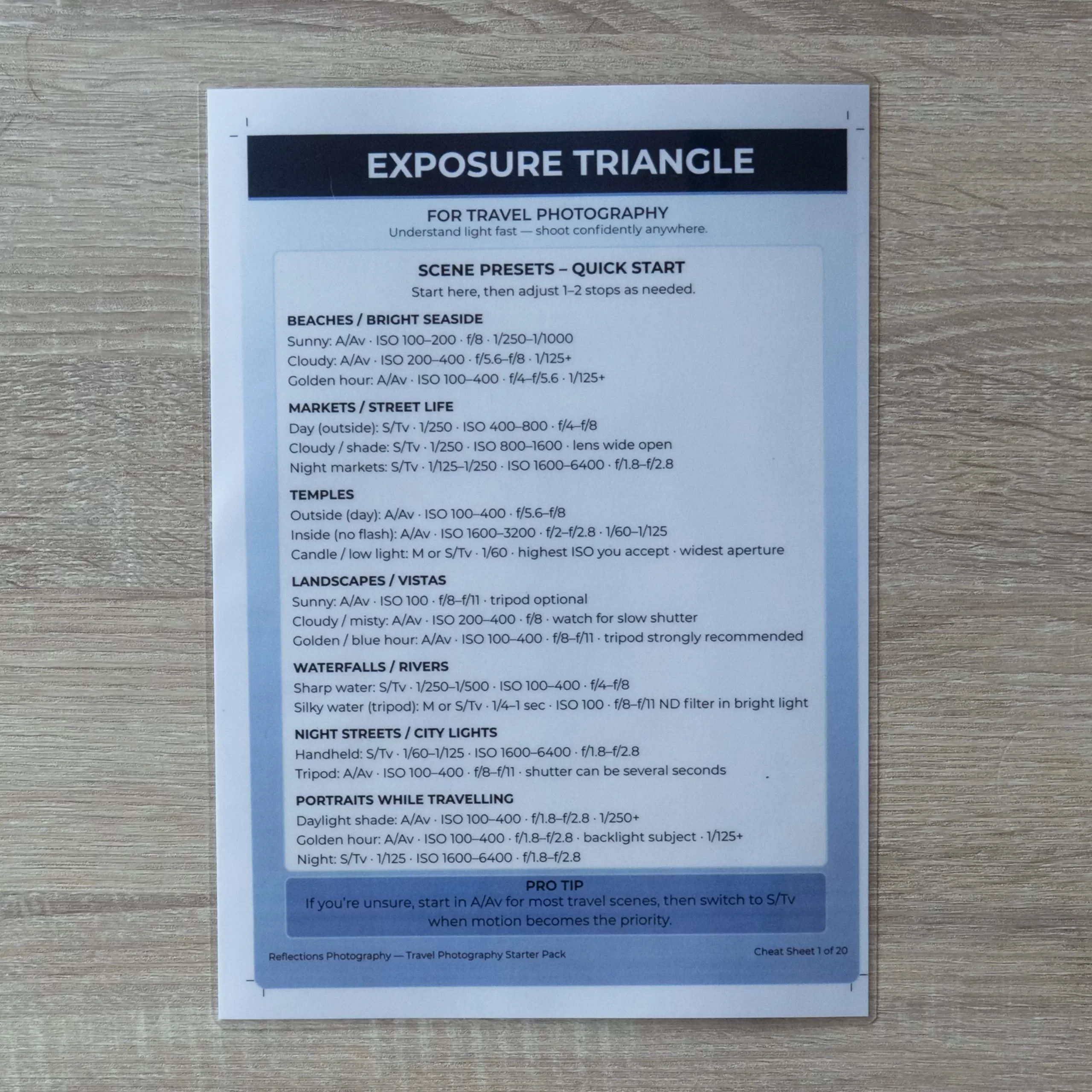
Practical guidance for adjusting exposure while travelling
Quick reference for balancing brightness and image quality
Who it’s for:
Travellers learning manual camera settings
Photographers confused about how the exposure triangle works
Anyone wanting a simple reference for balancing camera exposure
Many people first encounter the exposure triangle when learning photography and immediately feel overwhelmed. The concept itself is simple, but the way it is often explained can make it seem more complicated than it really is.
In travel photography you rarely have time to analyse every setting carefully.
This cheat sheet simplifies the idea so you can understand it at a glance while shooting.
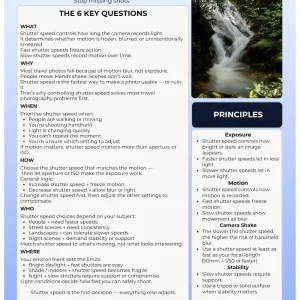
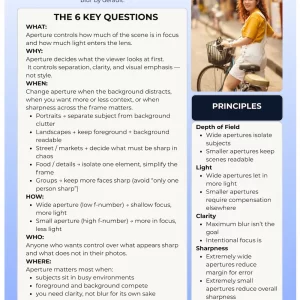
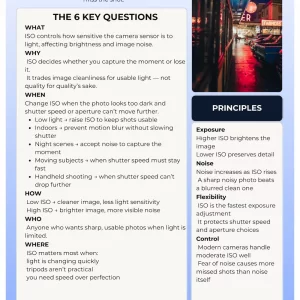
The exposure triangle is simply the relationship between three controls: shutter speed, aperture, and ISO. Each one affects brightness, but each one also changes something about the photograph itself. Shutter speed influences motion, aperture controls depth of field, and ISO affects sensitivity to light and image noise.
Learning how these three settings interact allows you to make quick decisions when the scene changes.
For example, you might want a fast shutter speed to freeze movement in a busy street, or a wider aperture to isolate a subject from the background. Adjusting one setting affects the others, and understanding that balance helps you maintain the exposure you want while keeping control of the image.
Travel photography often involves moving through different lighting environments quickly. Instead of guessing which setting to change, the exposure triangle gives you a simple framework for deciding what to adjust first.
This cheat sheet focuses on recognising those relationships quickly rather than memorising complicated rules.
For beginners, it turns the exposure triangle into a practical decision tool instead of a technical concept. For more experienced photographers, it acts as a quick visual reminder of how the three controls interact when working quickly in changing light.
Travel photography rewards fast decisions and clear priorities. Exposure Triangle — For Travel Photography helps you understand how your camera settings work together so you can focus more on the scene and less on the controls.
Reviews
There are no reviews yet.